
On The Frontline With Boma
There is a familiar axiom that says, “As you make your bed, so you will lie on it.” In simple terms, the quality of life one eventually enjoys is often connected to the sacrifices, discipline and hard work invested in building it.
For some young Nigerians, that bed has been painstakingly woven with music, talent, creativity, sleepless nights and an uncommon determination to conquer the world.
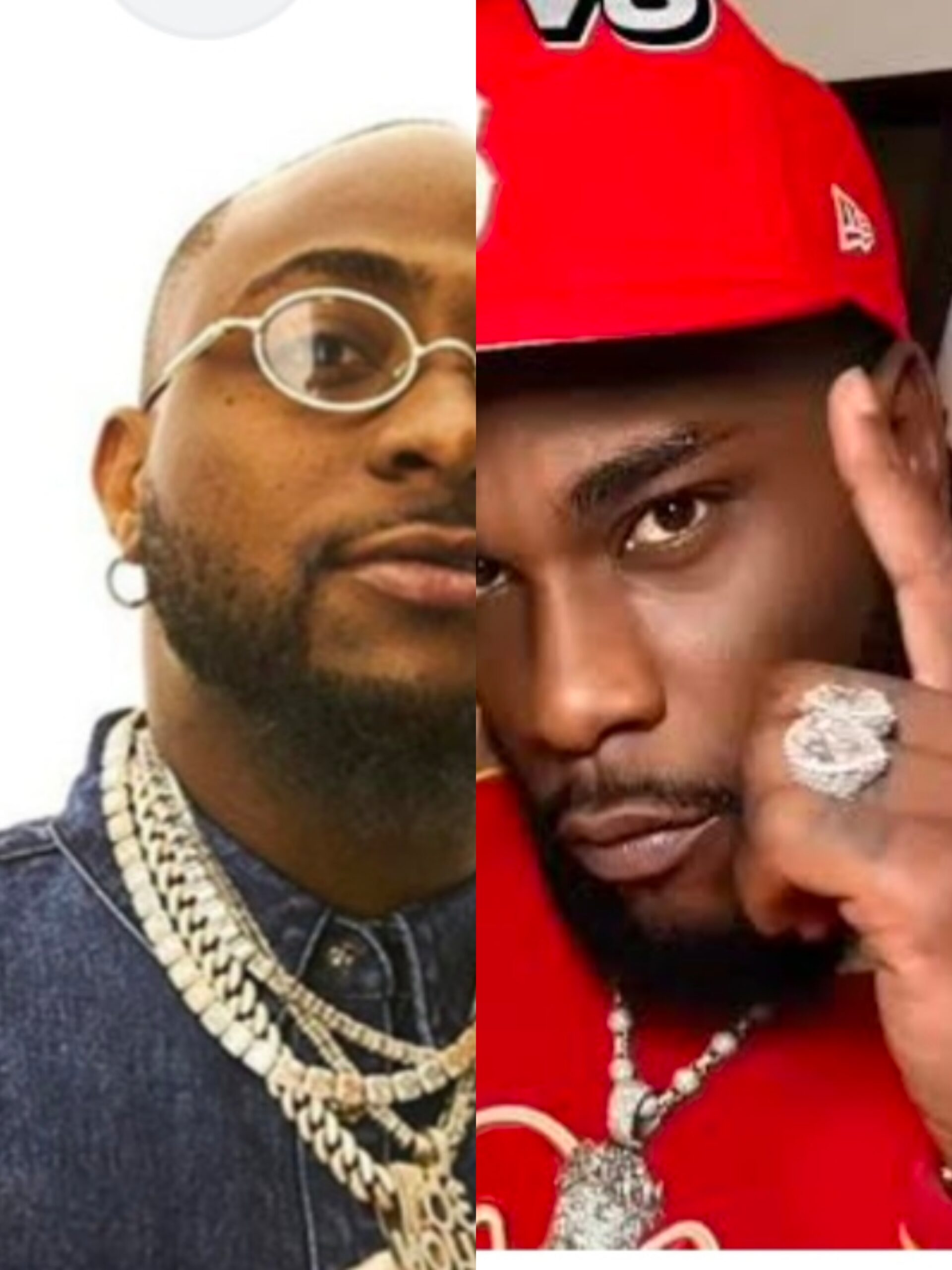
Today, names such as Burna Boy, Davido, Wizkid, Tems, Asake and Ayra Starr are no longer merely Nigerian household names. They have become global brands. They have carried Afrobeats from local streets and clubs to some of the biggest stages in the world. They have made international audiences dance to Nigerian sounds and, in the process, demonstrated that Nigerian creativity can compete successfully in the global marketplace.
That is something we should celebrate.
But every success story also invites a deeper question.
When extraordinary wealth arrives at a time of extraordinary hardship, what should the wealthy do with it?
That is where the stories of Burna Boy and Davido become particularly interesting.
Recently, social media was awash with reports that Burna Boy had taken delivery of a customised Bugatti Chiron VXX created by Dubai-based luxury automobile firm Venuum. The vehicle has been widely reported to be worth about ₦9 billion, although the exact purchase price has not been independently confirmed.
Before Nigerians could completely recover from the shock and fascination generated by that automobile, another luxury-car story involving Davido began making the rounds. Reports linked the Afrobeats star to a Mansory-customised Bugatti Mistral reportedly valued at about $11 million. However, reports have differed over the exact price and whether the $11 million figure definitively represents the particular Mansory Bugatti.
And there I was, like many other social-media watchers, looking at these extraordinary machines and asking a very ordinary question:
What kind of car costs billions of naira?
I looked at the pictures again.
Beautiful machines, no doubt.
Engineering marvels, perhaps.
Objects of desire for those who can afford them.
But another thought refused to leave me.
How much is enough?
That is not an attack on Burna Boy or Davido. Far from it.
These are young Nigerians who have worked extraordinarily hard and achieved what millions of young people dream about. Nobody should begrudge a successful person the legitimate fruits of his labour. If a musician earns his money lawfully and chooses to spend some of it on a luxury automobile, that is his personal decision.
But society has the right to ask questions about wealth, particularly when that wealth becomes so enormous that a single personal acquisition is worth more than what an average Nigerian could hope to earn in several lifetimes.
This is where the conversation should move beyond the Bugatti.
It should become a conversation about legacy.
What do we leave behind when the cars are gone?
What happens when the engine is silent, the cameras are switched off and the social-media excitement has moved on to another celebrity?
A luxury car can command attention today. Tomorrow, another car may arrive and steal the headlines.
But a school built for children who could never afford one?That remains.
A medical intervention that saves the life of a mother?That remains.
A scholarship that enables a brilliant but poor child to become a doctor, engineer, journalist, teacher or scientist?That remains.
A vocational centre that gives hundreds of young people skills with which they can earn a living?That remains.
A business incubator that transforms unemployed graduates into employers of labour?That remains.
This is where wealth acquires a different meaning.
The truth is that Nigeria has no shortage of rich people. What we desperately need is a culture in which wealth is accompanied by responsibility.
Interestingly, this conversation is not entirely mine.
In July 2026, First Lady Oluremi Tinubu publicly appealed to Burna Boy, Davido, Asake and other wealthy entertainers to establish or strengthen foundations through which they could support poor and vulnerable Nigerians. She acknowledged that expensive cars are not inherently wrong, while arguing that wealthy entertainers could also use part of their resources to help people in need.
That appeal came at a time when millions of Nigerians are confronting the daily realities of rising living costs, unemployment, inadequate access to healthcare and the struggle to maintain basic dignity.
But there is another side to this discussion which must not be ignored.
We must not turn successful musicians into substitutes for government.
The responsibility for building hospitals, schools, roads, creating jobs, maintaining security and establishing an economy in which citizens can prosper belongs fundamentally to government and public institutions.
Neither Burna Boy nor Davido is the Nigerian government.
Neither owes the nation the responsibility of solving every social problem.
It would therefore be unfair to suggest that because an entertainer owns an expensive car, he has automatically failed society.
No.
The real question is not whether a wealthy musician should own a Bugatti.
The question is whether our culture can move from celebrating the display of wealth to celebrating the impact of wealth.
There is a difference.
One says, “Look what I have.”
The other says, “Look what I have been able to do for others.”
The first attracts applause.The second builds history.
And perhaps this is where Nigeria’s new generation of entertainment billionaires and multimillionaires can redefine celebrity culture.
Our musicians have enormous influence over young Nigerians. Their clothes are copied. Their hairstyles are copied. Their language is copied. Their music shapes conversations. Their lifestyles influence aspirations.
If they can make millions of young Nigerians dream about owning luxury cars, they can also make millions dream about entrepreneurship, education, technology, philanthropy and nation-building.
Imagine, for a moment, if some of Nigeria’s most successful musicians jointly established a serious education foundation.Imagine scholarships for thousands of indigent students.Imagine a music-industry-funded medical intervention programme for children suffering from life-threatening illnesses.
Imagine youth entrepreneurship grants administered transparently.Imagine a creative academy where talented young Nigerians from poor backgrounds are trained in music production, cinematography, animation, digital media and entertainment business.Imagine if one of these global Afrobeats stars became as famous for transforming disadvantaged communities as he is for filling international concert arenas.
That would be a different kind of stardom.
And it would be difficult for the world to forget.
To their credit, Nigerian entertainers are not strangers to philanthropy. Davido, for instance, has long been associated with charitable interventions, while several Nigerian celebrities operate foundations and support social causes. Recent reporting has documented celebrities using their resources in areas including education, healthcare, women’s empowerment and support for vulnerable people.
So, this is not a charge sheet against Burna Boy and Davido.
It is a conversation about scale.
When wealth grows, should social responsibility grow with it?
Perhaps that is the more important question.
There is also something else Nigerians must learn.
We should stop measuring success only by what can be displayed.
A society that celebrates only houses, cars, jewellery, designer clothes and private jets may eventually produce people who know how to acquire wealth but do not know how to give it meaning.
The richest person in a community should not necessarily be the person with the most expensive automobile.
It could be the person whose wealth has produced the greatest number of opportunities for others.
The person who has educated 500 children.The person who has built a hospital.The person who has created 1,000 jobs.The person who has transformed a village.The person who has rescued young people from crime by giving them skills and purpose.The person who has ensured that widows can feed their children.The person who has made somebody else’s life less painful.
That is wealth with a human face.
And that is the kind of legacy that cannot be stolen, depreciated or parked in a garage.
Burna Boy and Davido represent something significant in Nigeria’s contemporary history. They belong to a generation that has shown the world that Nigerian talent can command global attention. Their success is part of the extraordinary story of Afrobeats and the creative economy.
They have every right to enjoy the rewards of their labour.
But perhaps their greatest opportunity lies beyond the next luxury acquisition.
The real question is not whether Burna Boy’s Bugatti is worth ₦9 billion.
It is whether the wealth that bought it can also create ₦9 billion worth of human possibilities.
The real question is not whether Davido’s reported luxury purchase is worth millions of dollars.
It is whether his influence can be converted into millions of reasons for young Nigerians to believe that tomorrow can be better than today.
Cars will come and go.Concerts will end.Albums will eventually become old.
Social media will move on.
But human beings remember those who changed their lives.
This is therefore my modest caution to our successful young Nigerians: enjoy your success, by all means. Celebrate your victories. Buy the beautiful things your labour has earned.
But while you are counting the cars in your garage, count the lives you have touched.
While you are expanding your estates, expand somebody’s opportunity.
While the world applauds your wealth, remember those who have never had the opportunity to discover their own talent.
And while you build personal fortunes, build legacies that will outlive you.
After all, the greatest evidence that a person lived is not always what he possessed.
Sometimes, it is what became possible for others because he lived.
Nigeria needs that kind of wealth.
We need a generation of successful people who do not merely become richer but make their society richer in education, opportunity, compassion and hope.
That is what good neighbourliness demands.
That, in its deepest sense, is patriotism.
And perhaps that is the real meaning of making a bed that others can also lie on.
Let us not merely be remembered for how extravagantly we lived.
Let us be remembered for how generously we made others live.
That is the Frontline caution.
On the Frontline, the pen is mightier, the truth our stamp.
On The Frontline With Boma is published by The Port Harcourt Telegraph Newspaper