

On The Frontline With Boma
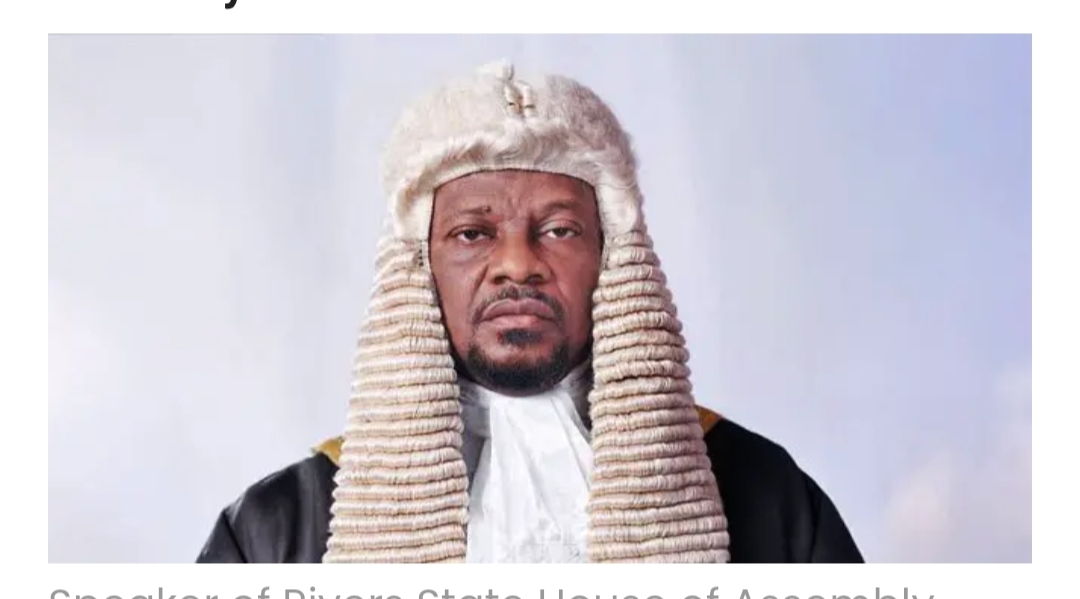
On the morning of March 9, 2026, I sat quietly in the comfort of my living room watching international news coverage of rising tensions in the Middle East involving Iran. The world, it seemed, was once again on edge. As is often the case in our fast-moving digital age, the remote control lay beside me as I moved from one channel to another, navigating the endless stream of global and local stories competing for attention. Out of curiosity, I switched to Arise TV, and within seconds I found myself drawn into a different but equally compelling theatre of events unfolding much closer to home — the screening of commissioner nominees at the Rivers State House of Assembly. Within seconds, a few familiar faces came into view.The first person I recognised was Speaker, Martin Amaewhule, then I noticed another figure, Linda Stewart. At that moment, I settled deeper into my seat, resisting every possible distraction,knowing that what was playing out before my eyes was more than a routine legislative exercise; it was a moment that would ignite conversations across Rivers State and beyond.
As a columnist and observer of public affairs, I feel a responsibility not only to my immediate community but also to a broader audience that relies on commentary to interpret unfolding events. In a world increasingly interconnected through digital platforms, the duty of the writer is not merely to report but also to reflect, question and illuminate.
The point of attraction was that the Rivers State House of Assembly was undertaking one of its most consequential constitutional responsibilities — the screening and confirmation of nine persons nominated by Governor Siminialayi Fubara as Commissioners and members of the State Executive Council.
The screening exercise had already begun, and one after the other, the nominees stepped forward to answer questions posed by members of the Assembly. It was clear from the onset that the lawmakers were not in the mood for ceremonial pleasantries. The questions came in rapid succession — some straightforward, others probing, and a few that could only be described as daunting.What should ordinarily have been a routine constitutional exercise soon evolved into a tense and dramatic session inside the hallowed chambers of the Assembly.
Legislative screening is never meant to be a walk in the park. It is designed to test competence, experience, temperament and readiness for public office. In mature democracies, such exercises are considered necessary filters to ensure that those entrusted with public responsibilities possess the capacity to discharge them effectively.
Yet the tone and atmosphere in that chamber suggested that the exercise might also test something deeper — the resilience and composure of the nominees under pressure.
While many of the nominees made their presentations and answered questions with varying degrees of confidence, three individuals particularly caught my attention. They were Professor Datonye Alasia, a renowned nephrologist and professor of medicine; Otonye Amachree, a Senior Advocate of Nigeria; and Tamuno Williams.a lawyer and former local government council chairman.
The barrage of questions directed at them would have rattled even the most seasoned public figures. At certain moments, it appeared some of them struggled to respond swiftly enough to the legislative crossfire. Yet, in my observation, they managed to maintain a level of composure and professionalism that spoke to their training and experience.
It is not in my character to engage in ventures that undermine personalities whether lawmakers or individuals nominated for public service. Public discourse must never degenerate into the destruction of reputations. The responsibilities entrusted to those in public offices are enormous, and the dignity of such offices must always be preserved.
However, the truth must also be told where facts compel reflection.
One particular moment during the screening stood out. At some point, the Speaker reportedly dismissed the credentials of a nominee as unimpressive and reflective of poor performance. In an ordinary setting, such a comment might have passed unnoticed. But this was no ordinary setting.
The session was being broadcast live.
In a world where digital content never truly disappears, words spoken in moments of legislative intensity can echo far beyond the walls of the Assembly chamber. A remark made within seconds can travel across television networks, social media platforms and international audiences.
For professionals who have spent decades building careers and reputations, such moments can carry unintended consequences.
This is not to suggest that lawmakers should dilute their oversight responsibilities. Far from it. The Constitution empowers legislative bodies to screen and confirm nominees precisely to ensure that the executive arm of government is populated by capable hands.
The Rivers Assembly, like every legislature in a democratic system, possesses the authority to question, scrutinise and even reject nominees where it considers them unfit.
But oversight must always walk hand in hand with decorum.
In many parliamentary traditions around the world, legislators subject nominees to rigorous questioning without descending into personal humiliation. The objective is not to disgrace individuals but to determine whether they are suitable for the office to which they have been nominated.
When the long and emotionally charged exercise finally concluded, four of the nominees were disqualified by the Assembly while five others were confirmed and subsequently sworn in by Governor Siminialayi Fubara.
Such outcomes are not entirely unusual in democratic governance. Legislative rejection of nominees has occurred in many jurisdictions across the world, including the United States Senate and several parliamentary systems. Screening processes are meant precisely to provide that level of institutional balance.
What perhaps made this particular episode unusual was the live broadcast of the entire proceeding.
Traditionally, commissioner screenings at the state level in Nigeria were conducted largely behind closed doors or with minimal media coverage. Proceedings were reported afterwards by journalists, often summarised in brief news reports.
The sudden shift toward full live coverage raises an interesting question: what informed the decision to open the exercise so completely to the public gaze?
One argument is that transparency strengthens democracy. Citizens have the right to witness how their representatives perform their duties. In an age where demands for accountability are growing louder, live broadcasts could be seen as a positive step toward openness.
However, transparency must be carefully balanced with responsibility.
The legislative chamber is not a courtroom drama designed for public spectacle. Its primary function is governance. When proceedings are transformed into highly televised events, there is always the risk that serious constitutional duties might begin to resemble political theatre.
Across the world, democracies have grappled with this delicate balance. While legislative hearings in countries like the United States are often televised, there are also rules of engagement designed to maintain decorum and prevent reputational damage to witnesses and nominees.
Nigeria, still consolidating its democratic culture, must also learn how to strike this balance.
The events in Rivers State offer an opportunity for reflection rather than recrimination.
Lawmakers must remember that the authority they wield derives from the trust of the people. The power to question must be exercised with fairness, restraint and respect.
On the other hand, nominees for public office must also recognise that public service demands rigorous scrutiny. Anyone aspiring to hold a position in government must be prepared to answer difficult questions and defend their professional record before representatives of the people.
Democracy thrives not when one institution humiliates another, but when each arm of government performs its duties with dignity.
There is also a deeper moral lesson in this episode.
Public life, by its very nature, exposes individuals to moments of intense scrutiny and unexpected outcomes. Success and rejection are both part of the journey. Those who were not confirmed may find other avenues to contribute their knowledge and experience to society. Professional worth is not defined solely by political appointment.
Equally, those who were confirmed must now justify the confidence placed in them by delivering tangible results for the people of Rivers State.
Ultimately, governance is not about political victory or legislative triumph. It is about service.
As the echoes of that screening session gradually fade from the airwaves and public conversations shift to other pressing matters, one enduring truth remains. Democracy is strongest not when power is exercised loudly, but when it is exercised wisely. Legislative scrutiny must be firm but fair; executive nominations must be bold but responsible; and public discourse must remain respectful even in moments of disagreement. Those who were confirmed now carry the weighty responsibility of serving the people with integrity, while those who were not must remember that public service is larger than any single appointment.
In the final analysis, the real measure of that dramatic day in the Rivers Assembly chambers will not lie in who passed or who failed the screening, but in whether governance in Rivers State ultimately delivers hope, progress and dignity to the people whose mandate sustains both the legislature and the executive. And that, perhaps, is the lesson that should guide every actor in the unfolding story of our democracy


