
On The Frontline With Boma
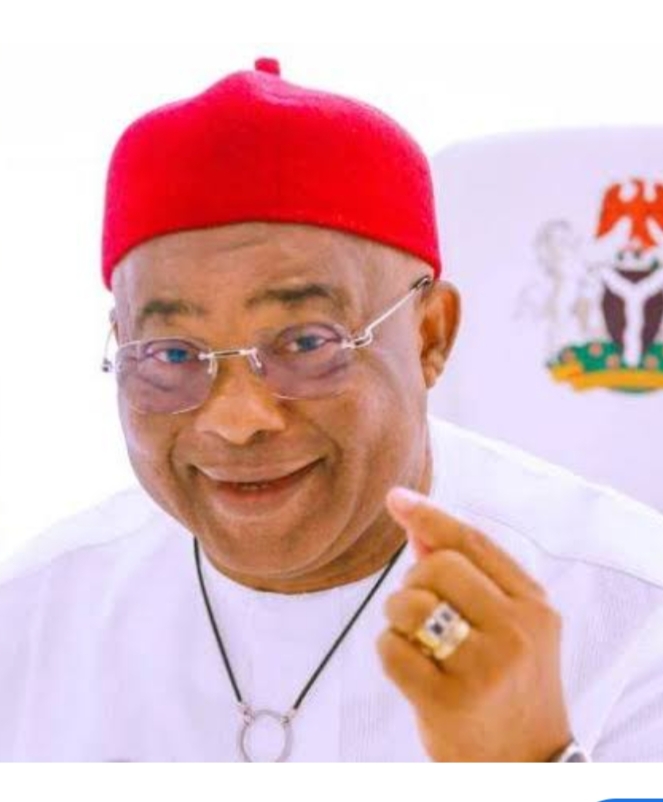
In politics, there are ordinary actors who merely occupy space and there are those rare individuals whose footprints alter the direction of events long before history catches up with them. Such personalities do not merely participate in politics; they shape its rhythm, unsettle its assumptions and force even their fiercest critics to acknowledge their staying power. One of such figures in contemporary Nigerian politics is Hope Uzodinma. Whether one admires him or disagrees with his politics, there is hardly any denying the fact that he has emerged as one of the most strategic and resilient political actors in the country today.
For some, he is controversial. For others, he is calculating. Yet for many who have watched his rise closely, he represents the portrait of a man whose destiny appears intertwined with political survival, reinvention and uncommon timing. In a nation where political careers often collapse under the weight of betrayal, miscalculation and public hostility, Uzodinma has consistently demonstrated an uncanny ability to weather storms that would ordinarily consume many politicians. It is perhaps this resilience that explains why his admirers describe him as a “man of destiny.”
I have watched the Imo State governor at different fora, listening carefully as he articulates views that resonate with those who desire practical governance rather than abstract promises. There is something remarkably different about the way he approaches issues. He does not come across as a politician given to excessive noise or flamboyant populism. Instead, he projects a calm but calculated disposition, one that suggests a man perpetually thinking several steps ahead of the political chessboard before him.
This article is not an attempt to canonize Hope Uzodinma or present him as a flawless saint in Nigeria’s rough political terrain. No politician deserves blind glorification, especially in a democracy where accountability must remain sacred. Rather, this intervention seeks to interrogate the phenomenon called Hope Uzodinma — a politician whose political journey increasingly appears guided by unusual timing, strategic patience and an ability to transform adversity into opportunity.
Indeed, fate appears to have smiled generously on him.
Long before becoming governor, Uzodinma fought his way into the Nigerian Senate to represent the people of Imo West Senatorial District, otherwise known as Orlu Zone. That district has historically been one of the most politically sensitive and competitive zones in Imo State, populated by powerful interests and ambitious gladiators who rarely surrender political space without resistance. Yet Uzodinma emerged and retained relevance for eight years in the Red Chamber.
That achievement alone revealed certain qualities about him. Politics in Nigeria, particularly in the South-East, is not for the faint-hearted. It is a terrain littered with shifting loyalties, invisible daggers and endless contests for dominance. To survive in such an environment requires more than popularity. It requires negotiation skills, resilience, strategic networking and, sometimes, the ability to absorb political shocks without losing direction. Uzodinma appeared to possess these attributes in abundance.
However, his defining moment came during the fierce succession battle that followed the administration of former Imo State governor, Rochas Okorocha. At the time, Okorocha remained a dominant political force within Imo APC and was determined to install his son-in-law as successor. Many believed no one within the party structure could successfully challenge the outgoing governor’s influence. But politics often rewards those willing to take risks others avoid.
Hope Uzodinma took that risk.
Against formidable opposition and entrenched interests, he pursued the APC governorship ticket with uncommon determination. Political observers understood the implications of that decision. It was not merely an electoral contest; it was a direct confrontation with one of the strongest political structures in Imo State at the time. Many expected him to retreat. Many expected him to compromise. But he pushed ahead and eventually secured the party’s governorship ticket.
That moment changed the political trajectory of Imo State.
The internal wranglings that followed weakened the APC and created openings for the opposition. The Peoples Democratic Party eventually emerged victorious according to the declaration by the Independent National Electoral Commission, INEC. To many, the matter appeared settled. But not to Uzodinma.
He challenged the outcome in court with relentless determination.
What followed remains one of the most dramatic legal and political twists in Nigeria’s democratic history. The Supreme Court eventually annulled the earlier declaration and affirmed Hope Uzodinma as the duly elected governor of Imo State. The judgment shocked many Nigerians, generated heated debates across the country and instantly transformed Uzodinma into one of the most discussed politicians in the nation.
For his supporters, it was justice delayed but eventually delivered. For his critics, it was an uncomfortable judicial outcome. But regardless of which side one belonged to, one fact became obvious: Hope Uzodinma had once again demonstrated an extraordinary ability to survive and triumph in circumstances where many had already written him off.
That episode further strengthened the growing perception that destiny had a peculiar relationship with the Imo governor.
There are politicians who crumble after public criticism. There are others who panic under sustained opposition attacks. Uzodinma, however, appears to possess a different temperament. He has cultivated the image of a politician who absorbs pressure without visibly losing composure. Even when political opponents launch aggressive campaigns against him, he often responds with strategic silence or calculated countermeasures rather than emotional outbursts.
Perhaps this explains why he was eventually chosen as Chairman of the Progressives Governors Forum. Such a position is not handed over casually. It requires trust, negotiation capacity and acceptability among powerful governors with varying ambitions and ideological tendencies. To emerge chairman of such a body suggests that beyond public controversies, Uzodinma commands considerable influence within the ruling political establishment.
Interestingly, the qualities that endear him to admirers are often the same qualities that unsettle his critics.
To his supporters, he represents courage, persistence and strategic intelligence. To his detractors, he symbolizes a politician too skilled at navigating power structures. But politics itself is fundamentally about navigation. Those who fail to understand power equations rarely survive long in Nigeria’s political arena.
Recently, Uzodinma again stirred conversations after obtaining his expression of interest and nomination forms for the Senate despite still having years left in Government House, Owerri. Predictably, the move triggered widespread speculation. Why would a sitting governor with time remaining in office suddenly signal interest in returning to the Senate?
Only Uzodinma himself can fully answer that question.
Some interpret the move as strategic positioning ahead of future political realignments. Others see it as part of a broader calculation connected to the off-cycle nature of Imo governorship elections. In Nigerian politics, timing is everything. Politicians constantly study evolving alliances, regional equations and emerging opportunities long before the public fully understands their intentions.
Whatever the true reason may be, Uzodinma’s Senate move once again demonstrates a politician who thinks ahead rather than reacting late.
Not long after, social media platforms became flooded with reports alleging that the Imo governor had been removed as Chairman of the Progressives Governors Forum. In today’s digital era where misinformation spreads faster than truth, the reports gained traction quickly. Political opponents celebrated prematurely while supporters expressed concern.
But within a short period, the forum issued a firm denial, describing the reports as malicious and false. The clarification restored calm and further reinforced the perception among his loyalists that Uzodinma possesses unusual political staying power.
Indeed, in Nigerian politics perception matters almost as much as reality.
The ability to survive political attacks repeatedly creates an aura around certain politicians. Over time, supporters begin to see them as untouchable while opponents grow increasingly frustrated by failed attempts to weaken them. Hope Uzodinma appears to be gradually entering that category of politicians whose resilience itself becomes a political weapon.
There are now whispers in some quarters that his return to the Senate may ultimately position him for a larger role, possibly even a contest for Senate President against incumbent Godswill Akpabio. Whether such speculations hold substance remains uncertain. Nigerian politics is fluid and often unpredictable. Alliances shift overnight. Friends become rivals. Rivals become allies. Yet one thing remains clear: Uzodinma’s name continues to surface whenever conversations about future power configurations arise.
That alone speaks volumes.
What makes Hope Uzodinma particularly fascinating is not merely his victories but the method through which he achieves them. He rarely appears politically stranded. Somehow, he manages to navigate towards safe political harbours even when storms intensify around him. He understands the importance of relationships within power circles and has evidently mastered the delicate art of maintaining relevance among influential political actors.
Critics may dislike this reality, but politics rewards strategic thinking, not sentiment.
In many ways, Uzodinma represents a broader lesson about Nigerian politics itself. Success in politics is rarely accidental. It often emerges from years of networking, careful calculations, tactical patience and the ability to read power currents accurately. Those who approach politics emotionally frequently become casualties of the system. Those who approach it strategically tend to endure.
Yet beyond strategy lies another intriguing element: perception of destiny.
Across cultures and societies, there are individuals whose lives seem guided by extraordinary timing. Doors open unexpectedly for them. Adversities somehow become stepping stones. Opposition inadvertently strengthens their visibility. Such individuals are often described as “favoured by destiny.” Hope Uzodinma increasingly fits into that narrative within Nigeria’s political consciousness.
Still, destiny alone does not sustain political relevance.
A politician may survive battles and secure victories, but history ultimately judges leadership through tangible impact on people’s lives. That is the higher test before Uzodinma and indeed every Nigerian political leader. Beyond political mastery lies the greater responsibility of governance — improving infrastructure, creating economic opportunities, enhancing security and restoring public confidence in democratic institutions.
Political survival may impress observers temporarily, but transformational leadership secures permanent legacy.
As the Imo governor continues navigating Nigeria’s turbulent political waters, many will keep watching closely. Admirers will celebrate his resilience. Opponents will scrutinize his every move. Neutral observers will continue attempting to decode the political calculations behind his actions. But regardless of differing opinions, one conclusion appears increasingly difficult to dispute: Hope Uzodinma has become one of the most consequential political figures of his generation in the South-East.
Perhaps that is why discussions about him provoke strong reactions.
He inspires loyalty among supporters and suspicion among opponents. He excites admiration in some quarters while generating discomfort in others. But truly influential politicians often produce such divided emotions because they disrupt existing assumptions and alter established equations.
In the final analysis, Hope Uzodinma’s story is not merely about one man’s political victories. It is about resilience in the face of resistance, strategic navigation in dangerous terrain and the mysterious intersection between preparation and destiny. Whether one applauds or criticizes him, his journey underscores a timeless political truth: in the ruthless arena of power, survival itself is often a profound statement.
And perhaps that is the enduring lesson from the political trajectory of Hope Uzodinma — that destiny may open doors, but only those with courage, calculation and endurance can remain standing when the storms arrive.
On The Frontline With Boma is published by The Port Harcourt Telegraph Newspaper authored by the managing editor.