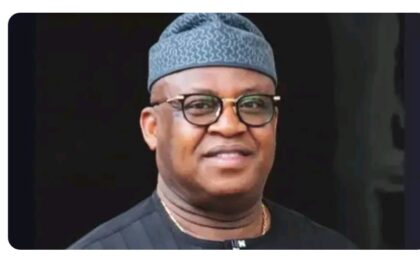


On The Frontline With Boma

Leadership, at its core, is about trust — trust in institutions, trust in professional competence, and, above all, trust in one’s own people. When that trust appears shaken, even symbolically, it does not go unnoticed. It provokes reflection. It raises questions. And in a politically sensitive climate such as that of Rivers State, symbolism carries weight.
Recent developments surrounding the appointment of a new Chief Press Secretary by Governor Siminialayi Fubara have stirred quiet but profound conversations within media and civic circles. Reports indicate that the governor opted for a professional from outside the state, reportedly from Delta State, on the grounds that journalists within Rivers were perceived as partisan amid the ongoing political crisis.
Let it be clearly stated: this discourse is not about the individual appointed. Professionalism knows no tribal boundary, and competence should never be diminished by geography. The issue, rather, lies in the reasoning. If indeed the decision was informed by a belief that local journalists are too partisan to manage the administration’s press affairs, then we must pause and interrogate what that assumption says about trust, about identity, and about governance itself.
Because if loyalty to truth is now mistaken for partisanship, then democracy itself is on trial.
Rivers State is not lacking in media pedigree. The state boasts respected members of the Nigerian Guild of Editors, the Nigerian Union of Journalists, and associations of indigenous newspaper proprietors who have paid their dues in ink and integrity. These are men and women who have covered military decrees, civilian transitions, court battles, oil conflicts, and electoral upheavals. They have risked intimidation and endured economic hardship to keep the public informed.
Under emergency rule and in its aftermath, Rivers journalists did not retreat into silence. They spoke truth to power. They called for calm. They interrogated policy. They advocated peace. They did what the press is constitutionally mandated to do: serve as watchdog, not lapdog.
So, what then is their fault?
Is it that they reported events as they unfolded?
Is it that they asked hard questions in hard times?
Is it that they refused to become cheerleaders in a season that demanded scrutiny?
If the argument is that local journalists are too “emotionally invested” in the crisis, one must ask: is proximity always a disqualification? Or can proximity also mean deeper understanding, historical memory, and cultural sensitivity?
The phrase “Rivers Money for Rivers People” has long echoed in the political lexicon of the state. It speaks to economic justice, resource control, and the moral claim that those who bear the brunt of environmental degradation should also reap the dividends of governance. It is a phrase that captures the aspiration for inclusion.
Yet inclusion must not stop at oil wells and revenue allocation. It must extend to opportunity—especially in positions funded by public resources.
When indigenes watch key appointments repeatedly go to outsiders, questions naturally arise. Not of xenophobia, but of equity. Not of hostility, but of belonging.
There is an idiom that says, “Charity begins at home.” Another warns, “The hen that lays the golden egg should not go hungry.” Rivers people have invested emotionally and politically in their leadership. They vote. They campaign. They defend. They endure the consequences of policy decisions. To suggest, even implicitly, that none among them is sufficiently competent or neutral to manage the governor’s media affairs is a message that cuts deep.
Home is home. No matter how far one travels, the hearth remains the anchor.
It is also worth recalling that during the military era—an era hardly celebrated for democratic inclusiveness—military administrators often retained indigenous professionals in advisory and administrative roles. If unelected administrators recognized the value of local expertise, should an elected government not do the same?
The argument that an outsider ensures neutrality is not without complexity. Yes, in polarized environments, leaders sometimes seek voices perceived as detached from local rivalries. But neutrality is not a function of geography; it is a function of character. A journalist from outside the state can be partisan. A journalist within can be objective. Professional ethics, not postal codes, determine credibility.
Moreover, journalism in Rivers has matured beyond parochial lines. The state’s media ecosystem reflects diversity of thought and robust debate. To dismiss it wholesale as compromised risks undermining public trust in the very institutions that democracy relies upon.
Let us be clear: no constitution bars a governor from appointing anyone he deems fit as Chief Press Secretary. It is within his prerogative. Leadership entails discretion. But discretion must be guided by wisdom.
And wisdom listens.
There is a Yoruba proverb that says, “The child who says his mother will not sleep will also not sleep.” Political tensions in Rivers have already stretched nerves thin. Decisions perceived as exclusionary only deepen fractures. Governance is not merely about legality; it is about legitimacy. It is about the perception that leadership values its own.
In moments like this, symbolism matters.
A CPS is not just a spokesperson. He is the bridge between government and governed. He shapes narratives, clarifies policy, and often becomes the human face of an administration’s communication strategy. When that bridge appears disconnected from the soil it stands on, skepticism grows.
Rivers parades accomplished communicators—seasoned editors, investigative reporters, media strategists, and academics in communication studies. Many have national reputations. Some have trained younger journalists who now practice across Nigeria. To suggest that none can rise above political divides is to paint an entire professional community with an unnecessarily broad brush.
Even if the governor’s concerns about partisanship are genuine, the solution need not be exclusion. Clear professional guidelines, transparent engagement, and inclusive consultation could achieve balance without alienation.
Leadership is not about avoiding criticism; it is about managing it constructively.
There is also the economic dimension. Appointments funded by public revenue circulate income. When indigenes occupy roles, salaries often stay within the local economy—supporting families, stimulating commerce, strengthening community ties. This is not an argument for insularity, but for mindful governance. In a time when many households grapple with economic hardship, opportunity carries weight beyond symbolism.
Rivers has witnessed political realignments before. Governors have come and gone. Alliances have shifted. What remains constant is the resilience of its people. But resilience should not be mistaken for silence.
The press is the fourth estate for a reason. It exists to question, to probe, to illuminate. If journalists are seen as adversaries for doing their duty, democracy suffers. If they are bypassed for fear of scrutiny, accountability weakens.
One cannot build lasting peace by sidelining voices that speak uncomfortable truths.
This column calls not for reversal out of anger, but for reflection born of love for the state. The government must ask itself: what message does this appointment send? Does it inspire confidence among Rivers journalists? Does it foster unity? Or does it unintentionally reinforce the narrative that local professionals are suspect?
A stitch in time saves nine.
If there is mistrust, let dialogue address it. If there is perceived bias, let professional standards confront it. If there is division, let inclusion heal it. Governance is strongest when it draws from the well of its own people while remaining open to external collaboration.
No state thrives in isolation. Cross-fertilization of ideas is healthy. Nigeria itself is built on interdependence among its federating units. But inclusion must not morph into displacement. Balance is key.
In the end, governance is sustained not merely by constitutional authority but by confidence — confidence that leadership believes in the capacity of its own people. Trust, once questioned, demands reassurance. And reassurance is not given in words alone but in deliberate, inclusive action.
Rivers has never been poor in talent. Its sons and daughters have excelled nationally and globally in journalism, academia, public service, and enterprise. The press corps within the state has weathered military decrees, electoral turbulence, and economic hardship. To doubt its collective professionalism is to underestimate a legacy built over decades.
This moment therefore calls not for defensiveness, but for reflection. Leadership that trusts its people strengthens itself. Leadership that appears to distance itself from them risks unintended alienation. In a season already heavy with political tension, wisdom suggests building bridges, not drawing lines.
Because at the heart of governance lies a simple but enduring truth: a government confident in its people earns the confidence of its people. And in Rivers, trust like oil , is a precious resource. It must be managed carefully, or it may one day run dry.
Again,it must be stated unequivocally that In the end,leadership will be judged not only by projects commissioned or roads paved, but by how it treats its own. History has a long memory. Political seasons pass, but reputations endure.
To Governor Fubara, this is a moment for statesmanship. To demonstrate that confidence in Rivers professionals remains intact. To reassure the press that scrutiny is not hostility. To affirm that “Rivers Money for Rivers People” is not merely a campaign slogan, but a governing philosophy that extends to opportunity, trust, and dignity.
Because when a people feel seen, they defend their leaders. When they feel sidelined, they withdraw.
And governance without goodwill is like a canoe without a paddle—it drifts, vulnerable to every current.
Rivers deserves better than drift. It deserves intentional leadership that harnesses the strength of its own sons and daughters while building bridges beyond its borders. It deserves a press corps respected, not suspected. It deserves appointments that unify, not divide.
In the marketplace of ideas, no voice should be silenced by assumption.
Let wisdom prevail. Let reflection guide action. And let Rivers, in all its complexity and courage, move beyond crisis toward a future where inclusion is not a promise deferred but a principle practiced.
For in the end, the true wealth of Rivers is not merely oil beneath the soil, but the talent within its people
On The Frontline With Boma is published by The Port Harcourt Telegraph Newspaper authored by the Managing Editor