
By Michael Nsikak Umoh
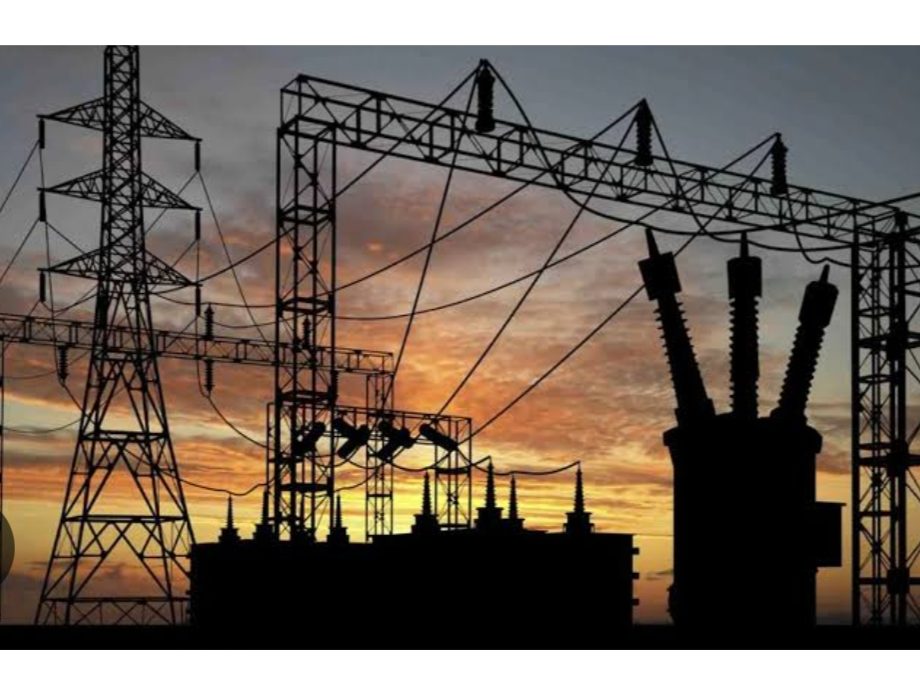
In the theatre of Nigerian governance, symbolism often speaks louder than policy briefs. Few images are as arresting as that of a landlord abandoning a crumbling estate to retreat into a privately fortified penthouse, while the tenants remain beneath a leaking roof. In this unfolding drama, the landlord is the Federal Government of Nigeria; the estate is the national electricity grid; and the penthouse is the proposed N17 billion solar mini-grid designed to power Aso Rock Presidential Villa independently of the troubled national supply. The announcement by State House Permanent Secretary, Temitope Fashedemi, that the seat of power will disconnect from the national grid by March 2026 is more than an administrative adjustment. It is a political statement of rare clarity. Framed officially as a green transition and a fiscal prudence measure, it nonetheless reads as a government-issued vote of no confidence in a sector the same government regulates, supervises, and repeatedly assures Nigerians is on the path to recovery. When the Presidency chooses insulation over reform, symbolism hardens into indictment.The deeper meaning of this decision emerges when placed beside a defining campaign promise. On December 22, 2022, then-candidate Bola Ahmed Tinubu pledged: “If I don’t give you constant electricity in the next four years, don’t vote for me again.” That declaration was not rhetorical flourish; it was an explicit covenant with the electorates. It set measurable expectations, among them, an expansion of generation capacity to 15,000MW. Yet by February 2026, the grid continued to oscillate within the familiar 3,000–5,000MW band, a range that has long symbolised Nigeria’s energy stagnation. If the Presidency disengages from the grid three years into a four-year mandate, the optics are unmistakable: confidence in achieving the promised transformation appears diminished.The financial dimensions intensify the contradiction.
The N17 billion allocation, spread across 2025 and 2026, comes at a moment when citizens are grappling with heightened tariffs under the “Band A” regime approved by the Nigerian Electricity Regulatory Commission. Consumers have been urged to accept market-reflective pricing in the name of sectoral reform. Yet reform rings hollow when the reformer elects to exit the system. It is difficult to persuade citizens to invest faith and money in a grid from which the highest office in the land is preparing to withdraw. Equally troubling is the moral asymmetry. In February 2024, Abuja Electricity Distribution Company publicly issued a disconnection notice over unpaid obligations attributed to the Villa.
The embarrassment accentuated the sector’s chronic liquidity crisis. Instead of modelling disciplined compliance and strengthening institutional confidence, the recourse now is structural secession. If energy costs are deemed unsustainable for the Presidency, what does that imply for manufacturers in Agbara, traders in Kano, artisans in Mushin, or industrial clusters in Nnewi and Aba? The message risks being interpreted as this: survival is individual; resilience is private; the grid is incidental. Proponents argue that renewable energy adoption at the Villa demonstrates environmental leadership. Indeed, distributed solar systems are indispensable to Nigeria’s energy future.
But context determines meaning. When decentralised power is embraced first as an elite shield rather than as a universal reform template, it resembles not innovation but retreat. It mirrors the long-standing “generator mentality”, the quiet acceptance that public infrastructure will fail and that self-provision is the only rational response.This is not to deny that independent power models can succeed.
The embedded generation initiative in Aba, driven by Geometric Power, illustrates that targeted reform and localised management can yield stability. Yet such models gain legitimacy when scaled inclusively, not when reserved symbolically or practically for the political apex.The World Bank has estimated that Nigeria loses approximately $28 billion annually to unreliable power. The scale of that loss demands systemic courage, not institutional insulation. When the Commander withdraws from the battlefield to a fortified enclave, the troops infer not strategy but surrender. Governance, at its highest level, carries an ethical obligation to share the burdens it seeks to resolve. Reform acquires urgency when leaders experience the same constraints as the governed.
As 2027 approaches, memory will matter. The electorate will recall the explicit pledge that constant electricity would be the litmus test of performance. To disconnect the Presidency from the national grid before that pledge matures risks transforming a campaign benchmark into a self-administered verdict. If the infrastructure managed and promoted by the state is deemed insufficient for the Head of State, the philosophical question becomes unavoidable: for whom, then, is it sufficient?The ‘solarisation’ of Aso Rock need not be an admission of defeat. It could yet be reframed as a pilot for nationwide decentralization, if accompanied by transparent, measurable, and accelerated reforms that lift the grid for all. Absent that, it stands as a potent metaphor: a quiet unplugging that echoes louder than any speech. In politics, symbols endure. And this one, if not carefully redeemed, may be remembered as the moment the state appeared to vote against its own promise.
.
“
“