
On The Frontline With Boma
There are moments in a nation’s history when leadership makes a decision so strategic, it transcends politics, partisanship, and sentiment. President Bola Ahmed Tinubu’s Lagos–Calabar Coastal Highway project stands tall as one of such defining moments.
For a long time, Nigeria has groaned under the burden of poor road infrastructure, particularly in regions that drive its economy. Nowhere is this more visible than in the South-South — the region that lays the golden egg, yet endures decades of infrastructural neglect.
For years, successive governments have promised to fix the East–West Road, the main artery connecting the oil-rich Niger Delta states. Yet, after billions of naira and countless pronouncements, the road remains a symbol of unfulfilled promises — dotted with gullies, broken bridges, and unending traffic snarls.
That is why Tinubu’s vision to open up a coastal highway linking Lagos to Calabar deserves commendation. It is not just another road; it is a strategic economic corridor that will redefine commerce, tourism, and regional integration in southern Nigeria.
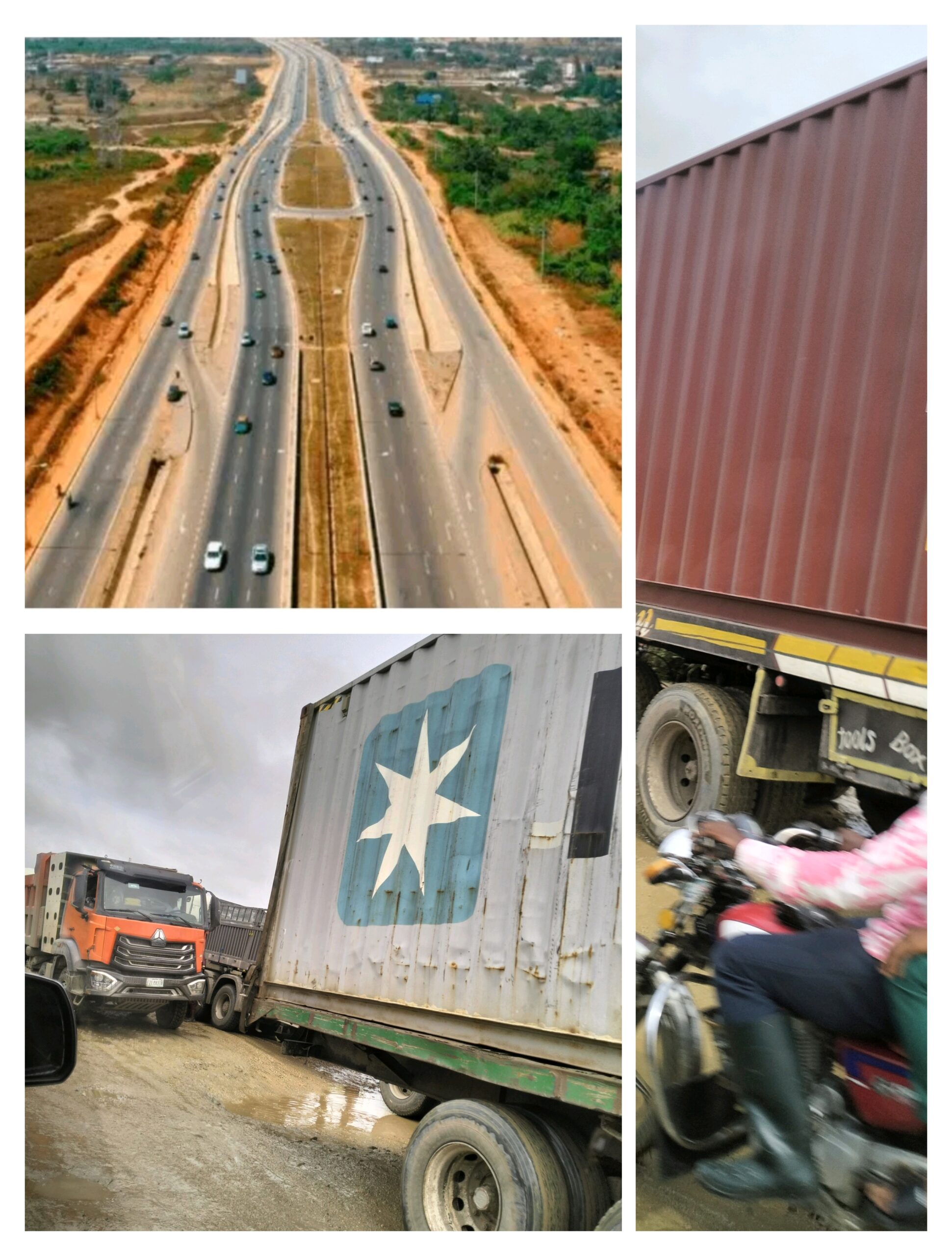
I had a personal encounter recently that reinforced this point. Traveling for a wedding along the Bori–Akwa Ibom axis, I was briefly deceived by a few kilometres of smooth tar. Then, the journey turned nightmarish.
The stretch between Itu and Calabar was a scene of chaos — trucks of all shapes and sizes, from the fairly new to the dented and abandoned, competed with small vehicles for narrow space on a failing highway.
At one point, traffic came to a complete standstill. I sat quietly in my car, watching truck drivers, schoolchildren, and villagers stranded under the hot sun, each with a story of frustration written on their faces.
For two long hours, engines steamed, tempers rose, and despair deepened. Eventually, the line began to move — not because of any official intervention, but thanks to local youths who decided to tow away two overturned trailers that had blocked the road for hours.
As the convoy crawled forward, I couldn’t help but reflect on how an entire region, the very source of Nigeria’s crude oil wealth, could be so criminally underserved. Why must people suffer so much in the midst of plenty?
This is where Tinubu’s Lagos–Calabar Coastal Highway comes in as a breath of fresh air. The 700-kilometre superhighway, stretching across nine coastal states, will not only ease the transportation burden but also open up vast economic possibilities.
From Lagos to Ogun, Ondo, Delta, Bayelsa, Rivers, Akwa Ibom, and Cross River, this road promises to change the narrative of isolation and underdevelopment. It is an infrastructure that speaks the language of inclusion and national unity.
The Lagos–Calabar route has long been overdue. The littoral states have yearned for a modern highway that connects them, facilitating trade, tourism, and investment. Each of these states boasts vast human and natural resources waiting to be tapped.
Imagine the tourism potential of such a corridor — from the beaches of Lagos to the oil hubs of the Niger Delta, the palm-lined creeks of Bayelsa, and the scenic beauty of Calabar. The coastal road will unlock Nigeria’s southern treasures.
It will also decongest the Lagos–Ibadan axis and reduce pressure on existing federal highways. Every day, countless man-hours are lost to traffic gridlocks. A new expressway running along the coast offers a needed alternative.
Beyond economics, it is a unifying project. It links Nigeria’s Southwest to the South-South and Southeast, bridging cultural and commercial gaps that politics has often widened. It is infrastructure diplomacy at home.
For decades, the South-South has felt alienated from national development priorities. The region that powers Nigeria’s economy with oil and gas revenue has received only token projects in return. This road marks a turning point.
But beyond applause, there must be accountability. Nigerians have seen many grand announcements before, projects flagged off with fanfare, then abandoned midway. The coastal highway must not follow that tragic script.
The federal government and contractors must commit to transparency and timelines. The project should not be politicized or slowed by bureaucracy. Each state along the corridor deserves to feel the impact within a reasonable time frame.
The pace of work on the East–West Road remains a sad reminder of what happens when projects lose momentum. Years after construction began, many sections still resemble construction yards rather than motorable routes.
During my recent journey, I noticed some ongoing rehabilitation, but at snail speed. Drivers lamented that they sometimes spend days on that stretch, sleeping in their trucks, praying for the rains to spare them another round of misery.
Such scenes must never repeat on the Lagos–Calabar corridor. The Tinubu administration has an opportunity to prove that infrastructure can be built swiftly, transparently, and to global standards.
This project must not only connect states but also empower communities along its path. Local contractors, artisans, and businesses should be involved. The road must become an avenue for jobs, skills, and prosperity.
When completed, the Lagos–Calabar Coastal Highway will symbolize not just asphalt and concrete, but faith — faith that government can still work for the people, that Nigeria can still build big and dream boldly.
For the people of the South-South, this road is more than a project; it is justice long delayed. It is a promise that their contribution to the nation’s wealth is finally being recognized in tangible form.
In this single initiative, President Tinubu has shown that he understands the geography of development and the politics of fairness. For once, Nigeria seems to be building not just roads, but bridges of trust. And for that, he got it right.