By Yusuf Aliyu Addy
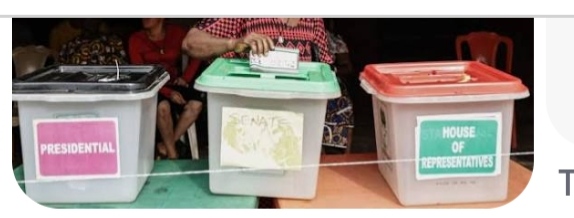
There is an election that happens at the polling station. The queues. The ballot papers. The counting. The announcement.
But there is another election that happens long before polling day. It is quieter. It unfolds in late-night meetings, in party offices where alliances are negotiated and in studios where narratives are shaped. It is in this second arena that the real contest often takes place.
As Nigeria moves towards the presidential election on 16 January 2027, both elections are already underway. What happens in the quiet one may decide whether the loud one retains any meaning at all.
Consider ordinary Nigerians. The trader in Kano counting what remains after restocking his stall. The civil servant in Abuja wondering how one salary will cover rent, school fees and food. The farmer in Benue unsure whether his farm and market roads are safe. The graduate in Lagos who has sent out hundreds of applications and heard nothing back.
Multiplied across millions of households, these experiences shape the national mood. Some citizens demand reform. Some turn to the opposition. Some stay loyal to the incumbent, believing hard reforms need time. And some withdraw altogether, convinced their votes do not count.
The danger is not simply that an incumbent might lose. It is that political actors may come to value keeping power above keeping public trust. At that point, the contest shifts to the institutions that count votes, resolve disputes and decide whether peaceful change remains possible.
Political engineering is not in itself illegal. The problem begins when organisation crosses into manipulation, coercion or abuse of public institutions. In Nigeria, defections can shift the balance of power without a single vote being cast. State institutions can be deployed for partisan ends. Money can distort competition. Information can be weaponised.
Incumbency carries real advantages: a record to defend, visibility and nationwide networks. These are not evidence of wrongdoing, and voters are entitled to re-elect a government they rate. But the presidency is an elected office, not an inheritance. The right to seek a second term is not a right to secure one by unlawful means.
What if a government facing wide dissatisfaction retains power through manipulation? No one can predict the outcome, and allegations require evidence. But the possibility deserves examination.
If citizens conclude that voting is meaningless, many will stop voting. I have spoken with young Nigerians who say they will never vote again because the system is rigged. Whether or not they are right, their loss of faith is a profound danger.
Instability also carries an economic price. Uncertain investors hold back. Uncertain businesses stop hiring. Ordinary Nigerians feel it first.
Worse, when electoral disputes are framed as victories or defeats for ethnic, religious or regional communities, citizens begin to see one another as enemies rather than opponents. We have seen this before. We know where it can lead.
Imagine Nigeria waking up after the vote to two competing narratives: one side insisting the result reflects the people’s choice, the other insisting the process was compromised. Social media floods with result sheets, polling unit videos and conflicting figures. The first casualty is clarity.
Citizens will need answers. Were votes counted according to law? Do polling unit records match the announced figures? Were complaints investigated?
Those answers must come from verifiable records, credible observation and lawful adjudication, not from the volume of online accusations. Parties alleging wrongdoing should preserve evidence and go to the tribunals. INEC should publish what the law requires and explain discrepancies. Journalists should separate confirmed facts from allegations. Courts must be free to rule without intimidation.
Peace without accountability breeds resentment. Accountability without peace can destroy the society it is meant to protect. Nigeria needs both.
The groundwork must be laid before polling day. Candidates should publicly commit to peaceful campaigning and restrain their supporters. Security agencies should protect voters, officials, observers and journalists without bias.
The opposition, too, has work to do. It must offer a credible, costed plan on inflation, jobs, insecurity, power, education and health. A coalition assembled only to remove an incumbent will struggle if its members cannot agree on the country’s future.
Voters, for their part, should compare records, reject vote buying and refuse to be divided along communal lines. Democracy grows stronger when voters demand standards from every party, not only the one they oppose.
The rule is simple: the law must apply to everyone. Whoever wins through a credible process, incumbent or opposition, deserves to have the mandate respected. If credible evidence shows unlawful conduct, the institutions must act.
A government should not fear an election simply because citizens are dissatisfied. Opposition parties should not claim victory before votes are counted. And citizens should never have to choose between defending their rights and protecting their lives.
Nigeria’s greatest danger is not that a particular party might remain in power. It is that the pursuit of power could become more important than the rules that make power legitimate.
A nation does not become democratic simply by holding elections. It becomes democratic when elections offer a credible path to peaceful change. The question for 2027 is not who can hold power the longest. It is whether Nigeria can build a democracy where no one needs to manipulate the people’s choice to stay in power.
That is the challenge of 2027, and the responsibility of every Nigerian.
This piece was written by Yusuf Aliyu Addy, a broadcast Journalist and political analyst.