

On The Frontline With Boma
Imagine walking into a hospital with the hope of being healed and walking out carrying a secret you did not know had been buried inside your own body.
Imagine being told that you had undergone a medical procedure, only to discover later that an organ that was once part of you was no longer there.
And imagine that the people you trusted with your life were the very people suspected of violating that trust.
This is the frightening picture emerging from the latest allegations of illegal kidney harvesting in Nigeria.
The recent arrest of two medical doctors and two other suspects by the Nigeria Police Force over an alleged organ-harvesting and human-trafficking syndicate operating around Nasarawa and Abuja has once again forced a disturbing question into our national consciousness: Are Nigerians safe even in places where they go to seek medical help?
The suspects include two nephrologists linked to a hospital in Abuja. Police said their investigation uncovered an alleged network that targeted vulnerable and financially desperate young people. One alleged victim, a 22-year-old man, was reportedly taken to a hospital in April 2026, while another person told investigators that he had been recruited in 2022. Police also alleged that forged documents, including identification and consent documents, were used in some of the procedures.
These are allegations, and the suspects remain entitled to the presumption of innocence until a competent court determines otherwise.
But allegations of this nature are too grave to be dismissed as another sensational crime story.
They strike at the very foundation of public confidence in healthcare.
A hospital is supposed to be a sanctuary. A doctor is supposed to be the person who stands between the patient and death. The Hippocratic tradition is built around the sacred responsibility to do no harm.
What happens when that trust is allegedly converted into an opportunity for exploitation?
That is where our fears begin.
The matter becomes even more disturbing because the alleged victims are reportedly young people who were vulnerable, poorly educated and financially desperate. Poverty, in such circumstances, becomes the bait. A promise of quick money can make a dangerous proposition appear like a lifeline.
For someone struggling to feed, pay rent or survive another day, a few million naira may look like salvation.
But what happens after the money is spent?
What happens when the young man who exchanged part of his body for temporary financial relief begins to suffer complications? Who pays for his treatment? Who follows him up medically? Who takes responsibility for his future health?
The human body is not a commodity.
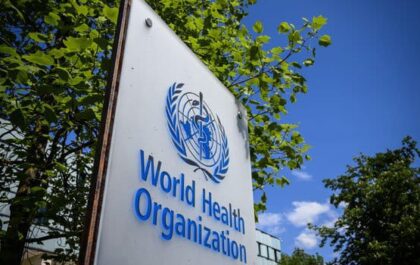
The World Health Organisation has repeatedly warned that organ shortages, inadequate regulation and unequal access to transplantation can create conditions in which vulnerable people are exploited. It advocates voluntary, non-remunerated donation, transparent allocation, protection of living donors and systems that ensure traceability and accountability.
This is why the Nigerian situation demands more than arrests.
It demands an examination of the entire organ-transplantation chain.
Who recruits the donor? Who verifies the donor’s identity? Who establishes genuine consent? Who certifies that the donor is not being coerced? Who examines the relationship between donor and recipient? Who authorises the hospital? Who keeps the records? Who monitors the operation? Who follows up the donor afterwards? And who receives the organ?
Every link must be identifiable.
Nigeria already has laws addressing these issues.
The National Health Act 2014 provides that tissue may not be removed from a living person for transplantation except in an authorised hospital and under the prescribed written authority. It also provides for an independent tissue transplantation committee in health establishments involved in transplantation. More importantly, Section 48 requires informed consent for removal of tissue from a living person, while Section 48(2) prohibits the removal of non-replaceable tissue from anyone below 18 and prohibits the removal of tissue for merchandise, sale or commercial purposes.
Section 54 goes further in dealing with human organs obtained from deceased persons. It provides for prescribed use and allocation and requires criteria for the approval of organ-transplant facilities. A person who contravenes the provision or charges a fee for a human organ is liable on conviction to a minimum of five years imprisonment without an option of fine.
There is another powerful legal weapon.
Nigeria’s Trafficking in Persons (Prohibition), Enforcement and Administration Act 2015 expressly recognises removal of organs as an exploitative purpose of trafficking. Section 20 criminalises recruiting, transporting, harbouring or taking in a person for organ removal where force, deception, coercion, abuse of vulnerability or payments or benefits are involved. The prescribed punishment includes a minimum of seven years’ imprisonment and a fine of not less than N5 million. The law also extends liability to persons who procure, offer, assist or otherwise participate in the removal, buying or selling of human organs.
So, the question is not whether Nigeria has laws.
The more uncomfortable question is: Are the laws being enforced effectively enough?
Look at the United Kingdom.
The case involving former Nigerian Senator Ike Ekweremadu, his wife Beatrice and medical doctor Obinna Obeta became a landmark demonstration of how seriously organ trafficking can be treated. A British court convicted them of conspiracy to traffic a young man for the proposed removal of his kidney. In his sentencing remarks, the judge described trafficking people across borders for organ harvesting as a form of slavery and emphasised the exploitation of poverty and desperation.
Britain has also strengthened its legal net. Under the Human Tissue Act 2004, commercial dealings in organs are criminal offences, including paying for an organ, receiving payment, seeking someone willing to supply an organ for payment or arranging and negotiating such transactions. The law was subsequently strengthened to cover certain conduct taking place outside the UK as well.
India, another country that has battled organ-trafficking allegations, operates an authorisation system for certain living donations and criminalises unauthorised organ removal and commercial dealings. Its amended law provides serious prison terms and financial penalties, with additional professional consequences for medical practitioners convicted of unlawful removal.
Then there is Spain.
Spain offers perhaps one of the strongest lessons: fighting organ trafficking is not only about punishing criminals; it is also about building a transparent transplantation system that reduces the space in which criminals operate.
Through its nationally coordinated transplant model, Spain has hospital transplant coordinators, authorised centres, national coordination and systems designed to ensure traceability of organs. Its rules require the traceability of organs from donation through transplantation or disposal, with records retained for decades.
This is the direction Nigeria must pursue.
We need a robust national organ-donation and transplantation registry that can answer, at any point, where an organ came from, who donated it, who received it, where the procedure took place and which medical professionals participated.
We need independent donor assessment.We need proper counselling.We need verifiable consent that cannot simply be manufactured with forged documents.We need routine audits of transplant centres.
We need stronger protection for whistleblowers.We need medical professionals who suspect unethical transplantation to have safe and clear channels for reporting it.We also need proper aftercare for legitimate living donors.
And perhaps most importantly, we must stop allowing poverty to become an invisible partner in this crime.
There is another danger here: we must not allow legitimate organ donation to become the casualty of our fear.
There are Nigerians who voluntarily donate organs to save relatives and loved ones. There are ethical doctors who perform life-saving transplant procedures. There are patients whose only hope of survival may be a kidney transplant.
The answer is therefore not to demonise transplantation or doctors.
The answer is to make the system so transparent that criminals cannot hide behind legitimate medicine.
The recent exposure of the alleged syndicate also demonstrates the growing power and danger of social media.
A citizen journalist or content creator can shine a light on a hidden crime that might otherwise remain buried. But social media allegations must still be independently investigated. The police themselves have previously cautioned against treating unverified claims about widespread kidney sales as established facts.
That distinction matters.
We cannot replace one danger with another by creating panic in which every hospital becomes a suspected crime scene and every doctor becomes a potential criminal.
But neither can we hide behind professional status when credible evidence of wrongdoing demands investigation.
The law must follow the evidence.
The police must investigate thoroughly. The medical regulatory authorities must examine the professional conduct of anyone implicated. Hospitals must open their records where legally required. Victims must receive medical examination, counselling, protection and access to justice.
And if anyone is found guilty, the law must speak with its full voice.
No kid gloves.
No sacred cows.
No influential middlemen.
No untouchable doctors.
No wealthy recipients hiding behind the desperation of poor donors.
No bureaucrat looking the other way.No hospital administrator pretending not to know.
The questions before us are enormous.
Why are young people becoming targets?
Who are the middlemen?
Who are the final recipients?
Are there financiers behind the networks?
Are there medical facilities knowingly or unknowingly providing cover?
Are forged consent documents being systematically produced?
How many victims are too frightened, ashamed or financially desperate to speak?
And, most importantly, how long has this been happening beneath our noses?
These questions deserve answers.
Nigeria cannot afford to wait for another young man to discover that an organ has disappeared before we act.
The young man who sells his kidney today for survival may tomorrow become a patient himself.
The poor person who is persuaded that one kidney is simply a spare part may later discover that health is not something that can be bought back with the money he was paid.
And the doctor who allegedly crosses the ethical line from healing to exploitation must understand that the white coat does not place anyone above the law.
The human body is not a warehouse.
A kidney is not merchandise.
Poverty is not consent.
Desperation is not permission.
And a hospital must never become a marketplace where the vulnerable enter as patients and leave as commodities.
Thankfully, the law has caught up with some suspects.
Now, let justice take its course.
Let the investigation go beyond the four people already arrested. Let the recruiters, financiers, facilitators, document forgers, beneficiaries and every other person involved be uncovered if the evidence establishes their roles.
Let the victims be heard.
Let the innocent be protected.
Let the guilty face the consequences.
Above all, let Nigeria build a transplantation system in which every organ can be traced, every donor can be protected, every consent can be verified and every patient can trust that the hand reaching out to save a life will never secretly become the hand reaching into another person’s body for profit.
Because when the guardians of life are suspected of becoming merchants of human organs, society must not keep quiet. It must not whisper.
It must ask questions.
It must demand answers.
It must demand justice.
And it must stand on the frontline.
On the Frontline, truth is uncompromising. It is the greatest weapon of justice, delivered without a cost. We are obligated to speak without fear of whose ox is gored.
For when silence protects the powerful and desperation feeds the market, the next victim may not know that something has been taken from him until it is already too late.
And when that day comes, the question will not only be who took the organ?
The greater question will be:
Who knew and who chose to look away?
On The Frontline With Boma is published by The Port Harcourt Telegraph Newspaper authored by the Managing Editor.