By Barth Ikiebe
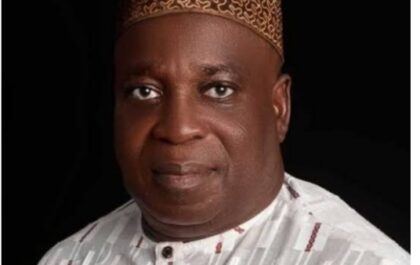
The Nigeria Football Federation, NFF, President, Ibrahim Gusau, and several members of the federation’s executive committee have stepped down from their positions.
The resignations came following growing criticism over the performance and administration of the country’s national teams, particularly Nigeria’s failure to qualify for the 2027 FIFA Women’s World Cup after the Super Falcons lost 2-1 to South Africa in the qualification playoff and the Super Eagles failure to qualify for the 2026 World Cup.
The Super Falcons result ended Nigeria’s remarkable record of appearing at every edition of the Women’s World Cup since the tournament began in 1991.
The situation has also drawn the attention of security agencies, with the Department of State Services (DSS) reportedly examining the use of a ₦17 billion intervention fund released by the Federal Government.
The money was approved in 2024 to help settle outstanding wages, bonuses and other payments owed to Nigeria’s national teams.
According to reports, officials have been asked to provide documentation explaining how the funds were utilised.
The scrutiny has added another layer to the pressure facing the NFF, which has already been criticised over issues ranging from national-team preparations and unpaid bonuses to the state of domestic football.
The lack of accountability has allowed repeated failures to go without sufficient consequences.
They pointed to problems across the national teams, age-grade football and domestic leagues, arguing that the difficulties are not limited to one particular section of the game.
In fact, the Super Eagles’ failure to qualify for the 2026 World Cup as one of the most embarrassing episodes in recent Nigerian football.
Before their decisive playoff against DR Congo, the players reportedly boycotted training while demanding outstanding match bonuses.
Nigeria subsequently lost the playoff, ending the Super Eagles’ hopes of reaching the World Cup in the United States, Canada and Mexico.
The reported resignations could also create uncertainty around the NFF’s electoral process, with elections previously scheduled for September 27 in Lafia, Nasarawa State.
With several board members reportedly having already left their positions, questions will now be raised over how the federation will proceed and whether the planned elections can go ahead as scheduled.
More importantly, the latest developments have once again placed the leadership and administration of Nigerian football under the spotlight.