On The Frontline With Boma
There are elections that one watches as a journalist, elections that one follows as a citizen, and there are elections that somehow pull at the strings of one’s emotions. For me, the just-concluded Osun State governorship election belonged to the last category.
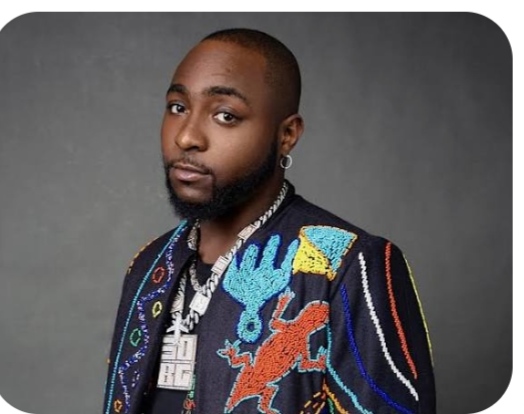
If there was one person who triggered my unusual interest and alignment with the Osun people during the August 15 governorship election, it was David Adeleke, popularly known as Davido, the globally acclaimed Afrobeats star.
I watched Davido closely. I followed his posts on X, formerly Twitter. I watched his interventions, his warnings, his campaign activities and his relentless defence of his uncle, Governor Ademola Adeleke. As a journalist, I picked the issues I considered salient. But beyond the politics, something else kept staring me in the face.
It was family.
In an age when the extended family is gradually losing its place in Nigerian society, when siblings sometimes look at one another as competitors rather than companions, and when envy, suspicion, selfishness and the pursuit of personal wealth have become formidable enemies of family cohesion, here was a young man publicly demonstrating that family still matters.
Davido did it four years ago. He did it again in 2026.
And he did not hide it.
When Governor Ademola Adeleke won the August 15 election and was declared winner by the Independent National Electoral Commission, polling 511,067 votes against his closest challenger, Bola Oyebamiji of the All Progressives Congress, Davido’s reaction was characteristically simple: “We did it.”
That “we” is significant.
It was not “I did it.”
It was “we.”
That is the language of family.
That is the language of collective ownership.
That is the language of people who understand that when one member of the family succeeds, the success belongs, in some measure, to everyone.
Davido has become one of the most visible members of the Adeleke family. Yet what struck me was not merely that he supported his uncle. After all, supporting a relative is not in itself extraordinary. What was extraordinary was the consistency, visibility and personal commitment with which he did so.
In May, he formally joined the campaign machinery for his uncle’s re-election, inaugurated the Imole Youth Mobilisation Campaign Council and obtained a membership card of the Accord Party.
He was not merely a celebrity who appeared at a rally to sing a few songs, wave to the crowd and disappear.
He became part of the political mobilisation.
He spoke.He campaigned.He challenged.He defended.
And, perhaps most importantly, he stood by his family.
There is something refreshing about this.
Nigerians have become accustomed to stories of families divided by politics. Brothers contesting against brothers. Sisters refusing to speak to sisters because of political differences. Relatives who become enemies because one belongs to one political party and the other belongs to another.
Sometimes, the disagreements are not even about ideology or principle. They are about contracts, appointments, money, influence and access to power.
The Adeleke story, for all its political controversies and imperfections, presents another picture.
Here, family members rallied around one another.
Davido’s father, Dr Adedeji Adeleke, is the elder brother of Governor Ademola Adeleke. Rather than seeking the political office for himself, he has supported his younger brother’s political journey. After the election, he described Ademola as his younger brother and spoke of the role of prayer and family solidarity in the victory.
Governor Adeleke himself has described his elder brother, Adedeji, as a father figure and trusted adviser whose counsel has influenced him. He attributed the closeness among the siblings to the values instilled in them by their parents.
That is the part of the Adeleke story that deserves attention beyond partisan politics.
We may disagree with their politics.We may question aspects of their political strategy.We may support or oppose Governor Adeleke.But surely, there is something worth learning from a family that appears to understand the importance of standing together.
This is where Davido becomes more than a musician in this story.
He becomes a symbol.
I listened to Dr Reuben Abati on Arise TV and agreed with the sentiment that every family deserves a Davido.
Indeed, every family does.
Every family needs that person who says: “This is my brother.”“That is my sister.”“That is my uncle.”“That is my aunt.”
“I may not agree with everything you do, but I will not abandon you when the storm comes.”
That is the meaning of family.
It is not simply gathering around a dining table during Christmas.
It is not merely attending weddings, burials and naming ceremonies.
Family is tested when there is disagreement, adversity, competition and pressure.It is tested when one member rises and another remains behind.It is tested when money enters the equation.It is tested when political power comes knocking.And it is tested when outsiders begin to exploit internal disagreements.
The Osun election provided several such moments.
The political atmosphere became increasingly charged in the days leading to the election. The freezing of Osun State Government accounts by the Economic and Financial Crimes Commission, EFCC, less than two weeks before the election generated considerable controversy. The EFCC said it was investigating alleged fraudulent handling of about N11 billion in state funds and said it had detected suspicious movement of money. The Adeleke administration, on the other hand, challenged the action and questioned its timing and legality.
Then came President Bola Tinubu’s intervention. The President directed that the restriction on the state account be lifted, following his conversation with Governor Adeleke.
Davido, as expected, was vocal.
At one point, amid concerns over the security situation and the possibility of intimidation, he appealed directly to United States President Donald Trump and the international community to pay attention to the Osun election. He called for peace, transparency and a free and fair election.
To his admirers, he was defending democracy.
To his critics, he was simply using his international celebrity status to intervene in a family political contest.
Perhaps both perspectives contain elements of truth.
But I am more interested in what his conduct says about the family.
Davido did not abandon his uncle because politics had become difficult.
He did not retreat because powerful political interests were involved.
He did not say, “This is your problem; solve it yourself.”
He stayed.
That, for me, is the story.
Interestingly, after the election, Davido himself said he had backed his family on his own and had “done my job.”
There is a lesson here for Nigerians.
Our society is increasingly becoming individualistic. We celebrate the nuclear family but sometimes forget that the extended family once constituted one of the strongest pillars of African social organisation.
The uncle was important.The aunt was important.The cousin was important.The nephew was important.
The grandmother was not merely an elderly woman living somewhere in the village. She was part of the family institution.
Today, however, many families are fragmented by money, inheritance, politics, religion, social status and suspicion.
A brother becomes jealous because his younger brother is doing better.
A sister becomes resentful because another sister received more attention from the parents.
Relatives fight over property.
Children quarrel over inheritance even before their parents are buried.
Some family members become strangers because of political disagreements.
Others become enemies because someone believes another person has acquired more wealth.
And some families collapse completely because nobody is prepared to make the first move towards reconciliation.
This is why the Adeleke example is worth discussing.
It reminds us that family strength does not necessarily come from the amount of money members possess.
It comes from unity.It comes from trust,It comes from loyalty.It comes from the ability to accommodate one another.
It comes from understanding that every member of the family has a different journey.
Davido’s father could have sought political power himself. He is a prominent businessman and possesses considerable resources. Yet he has supported his younger brother’s political journey while remaining outside the political contest for the governorship.
That distinction is important.
In Nigeria, the combination of wealth and politics can sometimes become combustible. Some wealthy Nigerians enter politics because they want power; others want political power to protect their economic interests; still others want both.
The Adeleke family’s political arrangement offers a different picture: one family member occupies the political space, another provides counsel and support, while another—Davido uses his enormous public influence to rally support.
That does not make the family above criticism.
Neither should family loyalty be confused with blind loyalty.
This is an important caveat.
Family should never become a shield for wrongdoing.
A brother who commits a crime should not be protected because he is a brother. A sister who abuses public office should not be defended because she is a sister. Family loyalty must coexist with accountability.
But disagreement should not automatically translate into hatred.
We can hold our relatives accountable without destroying the family.
We can disagree without becoming enemies.
We can support one another without endorsing wrongdoing.
That, perhaps, is the balance Nigeria desperately needs.
And so, to Davido, I say: keep doing what you are doing.
Not because every political position you take must be correct.
Not because every member of your family must be right.
But because your public demonstration of family solidarity is a reminder of something we appear to be losing.
Family matters.
When your family stands behind you, the storm becomes easier to weather.
When your siblings celebrate your success instead of envying it, the family becomes stronger.
When relatives protect one another from needless humiliation while still demanding accountability, society becomes healthier.
When the rich member remembers the struggling member, and the successful member remembers where he came from, the family becomes a sanctuary rather than a battlefield.
I also hope Davido’s friends and other young Nigerians will emulate the positive aspect of this example.
Not the politics.Not necessarily the noise.But the loyalty.The willingness to stand with family.The courage to say, “I am here.”
Because Nigeria needs more families that can stand together.
The unity of a nation does not begin in Aso Rock.It does not begin in the National Assembly.It does not begin in political party offices.It begins at home.
A nation whose families are broken will eventually inherit a broken society.
A nation whose families teach love, tolerance, sacrifice, honesty and mutual support will have citizens who understand those values.
That is why the Davido phenomenon in Osun is larger than an election.
It is a conversation about what we have become and what we should try to become again.
Perhaps, therefore, the most enduring image from Osun 2026 will not be the campaigns, the rallies, the political fireworks or even the final figures announced by INEC.
Perhaps it will be a nephew standing firmly beside his uncle.A father supporting his younger brother.A family closing ranks.And a young man telling the world, in his own unmistakable way: “We did it.”
Yes, Davido, you did your part.
But the greater message is this: when family stands together, it becomes difficult for the world to tear it apart.
Nigeria needs to rediscover that strength.
The extended family should not become an endangered institution.It should be revived.It should be nurtured.It should be protected.
And if Davido has, even inadvertently, reminded Nigerians of that forgotten truth, then perhaps his most important contribution to Osun was not political after all.
It was human. It was familial.
It was a reminder that in a world increasingly driven by self-interest, there is still tremendous power in saying:
“This is my family. I will stand with them.”
On the Frontline, facts are sacred. Truth is laid bare, no matter whose ox is gored.
On The Frontline With Boma Is Published by The Port Harcourt Telegraph Newspaper authored by the Managing Editor .