


On The Frontline With Boma
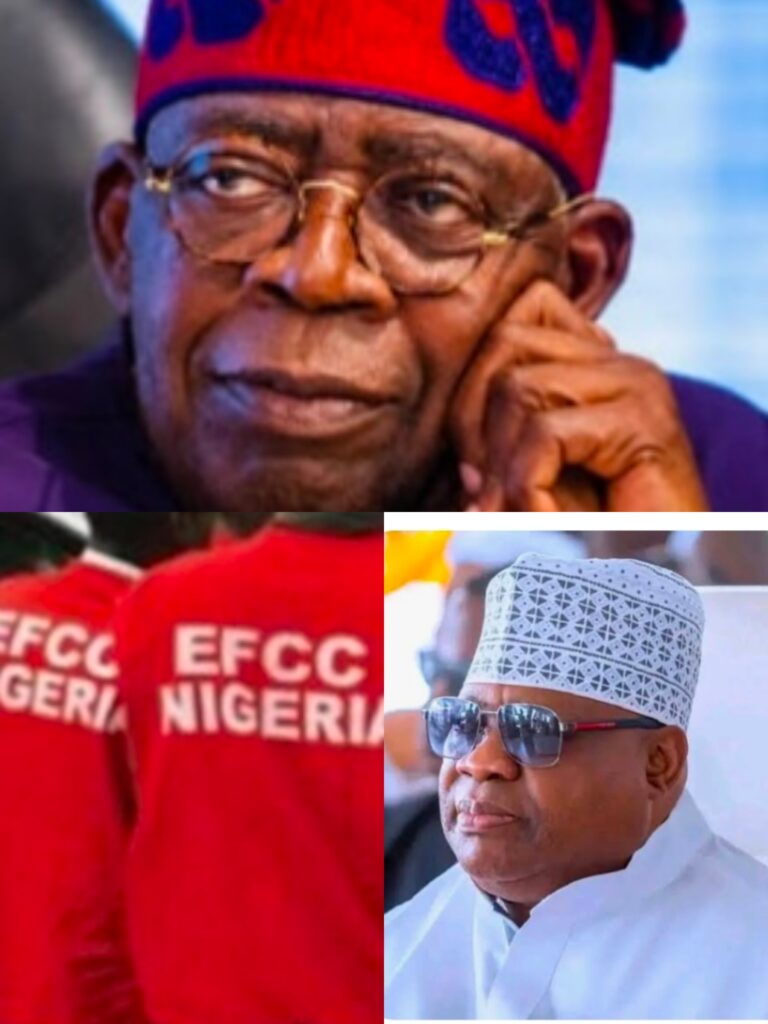
Sometimes, democracy is tested not at the polling unit but long before the first ballot is cast. It is tested in the decisions of public institutions, in the exercise of state power and, perhaps most importantly, in the confidence the people repose in those entrusted with authority. Elections may eventually produce winners and losers, but the conduct of institutions before, during and after those elections often determines whether democracy itself emerges victorious.
That reality came into sharp focus in the days preceding the Osun State governorship election.
While politicians traversed towns and villages canvassing for votes, another drama was quietly unfolding in the corridors of justice. The Economic and Financial Crimes Commission (EFCC) secured a court order freezing the accounts of the Osun State Government over ongoing investigations into the alleged diversion of about ₦11 billion in Ecological Fund and Federation Account Allocation Committee (FAAC) receipts.
Expectedly, the development ignited a political firestorm.
To supporters of the opposition All Progressives Congress (APC), the action represented a bold demonstration that no government should be above scrutiny. They applauded the anti-graft agency for pursuing allegations of financial misconduct irrespective of whose ox was gored.
Within the camp of Governor Ademola Adeleke and his supporters, however, the mood was entirely different. There was outrage, anxiety and, above all, suspicion. The governor, who was seeking another mandate from the people, repeatedly drew attention to the freezing of the state’s accounts during his campaign engagements, insisting that the action was capable of disrupting governance and creating unnecessary hardship for workers, pensioners, contractors and ordinary citizens who depended on government services.
Outside the political arena, millions of Nigerians watched with growing concern. They were less interested in partisan arguments than in one simple but fundamental question.
Why now?
That question became louder than every legal explanation offered.
No responsible citizen should oppose the investigation of alleged corruption. Public funds belong to the people. Every naira collected in taxes or received from the Federation Account must be accounted for. If there are credible allegations of financial misconduct, the law should be allowed to take its course without fear or favour.
Indeed, the establishment of the EFCC was itself a response to the national yearning for accountability. Nigerians desired an institution that would pursue economic crimes with professionalism, impartiality and courage. The country has suffered enormously from corruption. Roads have remained uncompleted. Hospitals have deteriorated. Schools have decayed. Development has often been sacrificed on the altar of personal enrichment. Consequently, no patriotic Nigerian should discourage genuine efforts to protect public resources.
Yet, there is another side to the conversation.
The fight against corruption must never be separated from the principles of fairness, proportionality and good judgment. In public administration, timing is not a trivial matter. It can either strengthen public confidence or undermine it completely.
This is where the Osun controversy assumed national significance.
Whether rightly or wrongly, the timing of the freezing order created an impression that extended beyond the legal issues before the court. Coming so close to a governorship election, it inevitably invited political interpretation. Once that happened, the conversation shifted from alleged financial infractions to the neutrality of state institutions.
That, in itself, was unfortunate.
In every thriving democracy, institutions derive their strength not merely from the powers conferred on them by law but from the confidence citizens have in their impartiality. Justice, they say, must not only be done; it must also be seen to have been done. The same principle applies to anti-corruption agencies. It is not enough to act within the law. Their actions must inspire confidence that they are insulated from partisan calculations.
Nigeria’s political history has unfortunately made this an uphill task.
Over the years, successive administrations have faced accusations that anti-graft agencies were sometimes more energetic in pursuing perceived political opponents than allies of those in power. Some of those accusations were politically motivated. Others arose because of the sequence of events surrounding certain investigations. Whatever the truth in individual cases, the perception has endured.That perception is dangerous.
The moment Nigerians begin to see anti-corruption as an instrument of political warfare instead of an impartial quest for accountability, the credibility of the entire process suffers. Genuine investigations become subjects of political debate. Court orders are viewed through partisan lenses. Public confidence begins to erode.
That is a price no democracy should be willing to pay.
The implications extend beyond politicians. When the accounts of a state government are frozen, it is not the governor alone who feels the impact. Civil servants waiting for salaries, pensioners hoping for their monthly stipends, contractors executing public projects, health institutions requiring operational funds and schools depending on government subventions all become unintended victims. Governance does not stop because investigations are ongoing. The wheels of government must continue to turn in the interest of the people.
This is why extraordinary measures must be exercised with extraordinary caution.
The EFCC undoubtedly has a constitutional responsibility to investigate allegations of financial crimes. That responsibility should neither be obstructed nor trivialised. However, the exercise of such powers should constantly take into account the broader public interest. Fighting corruption and preserving democratic stability are not mutually exclusive objectives. Both can, and indeed must, coexist.
Thankfully, before the controversy spiralled beyond control, President Bola Ahmed Tinubu stepped in.
Less than twenty-four hours after the EFCC publicly defended the freezing of the Osun State Government’s accounts, the President reportedly directed the anti-graft agency to vacate the court order. His reason was both simple and significant. While affirming that he had no intention of interfering with the lawful operations of the EFCC, he acknowledged that the timing of the action was unfortunate and capable of creating the wrong impression so close to a governorship election.
That intervention deserves commendation.
Leadership is often measured not only by the policies a president initiates but also by his willingness to correct actions capable of eroding public trust. By acting swiftly, President Tinubu demonstrated an appreciation of the delicate balance between enforcing accountability and protecting democratic credibility.
Nevertheless, the incident raises larger questions that cannot simply disappear because the freezing order was vacated.
How did such a politically sensitive decision escape careful scrutiny before it was implemented? Were there no internal mechanisms to assess the wider implications of freezing the accounts of an elected government on the eve of a major election? Could the investigation not have proceeded without creating the impression of political interference?
These are legitimate questions.
The President himself admitted that the development embarrassed his administration because it could easily be interpreted as politically motivated. That acknowledgement should serve as a wake-up call, not only for the EFCC but for every public institution whose actions possess the capacity to influence democratic processes.
The Nigerian Presidency is unlike any other public office. Every action taken by ministries, departments and agencies ultimately reflects on the occupant of Aso Rock. Whether he authorised such actions or not, public perception often places the responsibility squarely on the President’s shoulders.
That is both the privilege and the burden of leadership.
Our elders often remind us that uneasy lies the head that wears the crown. There is profound wisdom in that timeless saying. The President receives applause when government succeeds. Equally, he bears the criticism when government falters. Delegation may distribute responsibilities, but accountability remains indivisible.
That is why President Tinubu must continue to keep a close watch on the activities of institutions operating under his administration. He should not wait until controversies explode before interventions become necessary. Preventive leadership is always more effective than corrective leadership.
Listening should become one of the strongest instruments of governance. Beyond official briefings and intelligence reports, the President should constantly seek honest feedback from ordinary Nigerians—the civil servant struggling to feed a family, the market woman grappling with rising prices, the university lecturer worried about the future of education, the commercial driver navigating difficult economic realities and even workers within the Presidential Villa who interact daily with the pulse of the nation.
Governments that stop listening gradually lose touch with reality.
Nigeria today needs institutions that inspire confidence rather than suspicion. It needs anti-corruption agencies that are fearless but unquestionably fair. It needs politicians who place public interest above partisan calculations. Above all, it needs leadership that understands that democracy flourishes when citizens believe that every institution operates without fear, favour or hidden political motives.
The Osun episode should therefore not be remembered merely as another political controversy. It should become an opportunity for institutional introspection. The EFCC must continue its important assignment of fighting corruption, but it must equally recognise that credibility is its greatest asset. Once public confidence begins to diminish, even its noblest intentions will be greeted with scepticism.
There is no contradiction between combating corruption and protecting democracy. The two objectives should reinforce one another. A nation that sacrifices democratic values in the name of fighting corruption ultimately weakens both. Likewise, a nation that tolerates corruption in the name of democracy undermines the very foundations of good governance.
Nigeria deserves neither extreme.
The challenge before our leaders is to strike the delicate balance between justice and fairness, accountability and restraint, power and wisdom.
That balance is the true test of leadership.
On the Frontline, power must always be exercised with caution because authority without public trust soon loses its moral force. Governments earn legitimacy not merely by winning elections but by inspiring confidence in every decision they take. Facts remain sacred, institutions must remain impartial, and democracy must never become collateral damage in the pursuit of any political objective.


