
By Barth Ikiebe
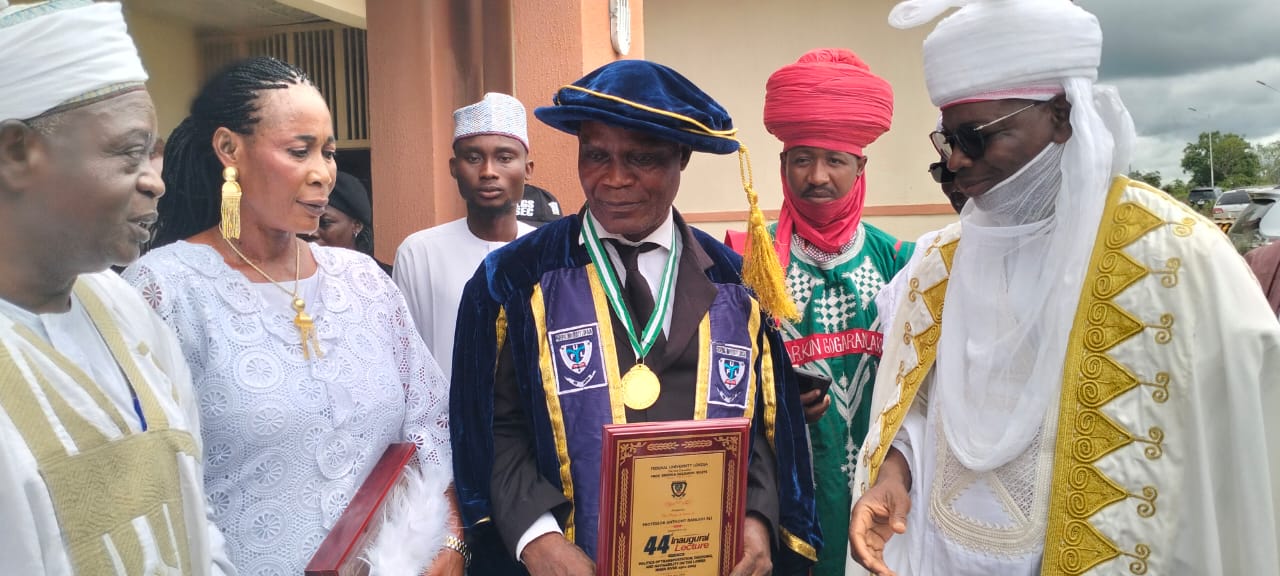
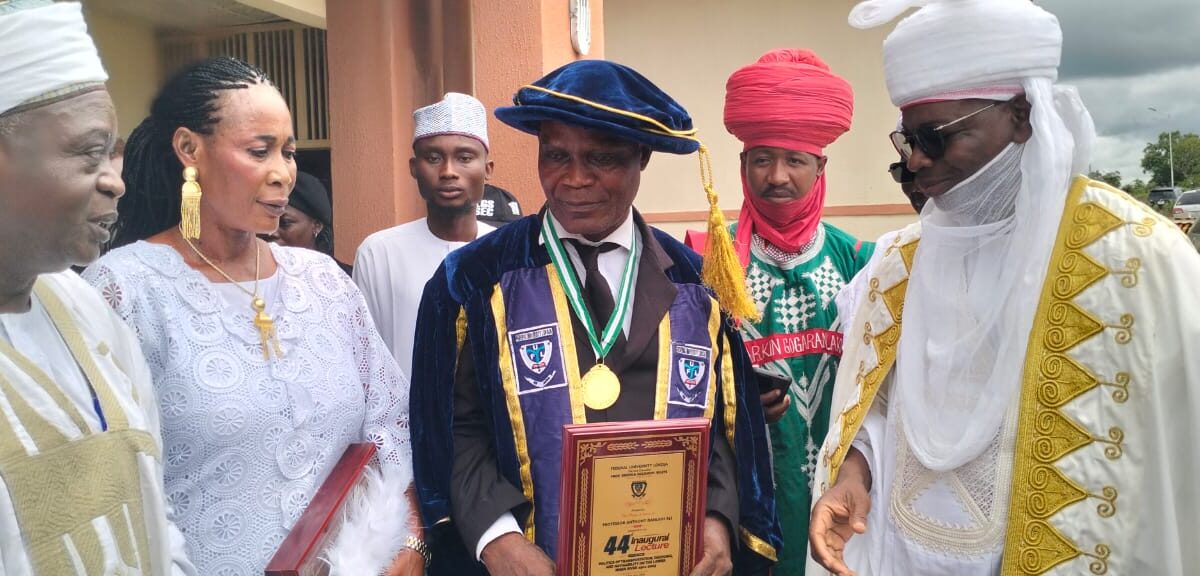
A Professor of Transport History at Federal University, Lokoja, Anthony Danladi Ali, has advocated for annual dredging of lower Niger River to unlock its vast economic potential and reposition inland waterways as a viable alternative to road and rail transport in Nigeria.
Professor Ali who is the current Head of Department (HOD), History and International Studies, Federal University Lokoja made the appeal recently at the 44th inaugural lecture of the University in Lokoja, Kogi State.
The lecture, titled, “Politics of Transportation; Dredging and Navigability on the Lower Niger River (LNR), 1901–2023,” examined the historical, political, and economic dynamics shaping inland water transportation in the country.
Professor Ali identified two major schools of thought on the dredging of the River Niger. The first, which he described as “The Cynics,” argue that dredging the river is impractical, maintaining that it is merely a stream and unsuitable for such large-scale intervention.
In contrast, the “Positivists,” according to him, believe it is feasible to dredge the river from the confluence of the River Niger and its largest tributary, the River Benue, thereby enabling year-round navigation by ocean-going vessels from overseas into the hinterland.
Drawing from his research, the inaugural lecturer observed that transportation systems in technologically advanced regions of Europe and America were deliberately designed as far back as the 18th century to support industrial growth and capitalist production, noting that such systems reflected long-term planning and investment tailored to economic expansion, an approach he said Nigeria is yet to fully adopt.
Presenting his findings, the scholar stated that much of Nigeria’s transportation infrastructure established during the colonial era primarily served the interests of the colonial administrators rather than the developmental needs of the local population.
He further noted that the relevance of the Lower Niger River declined significantly with the expansion of road and rail networks, emphasizing that despite prevailing skepticism, evidence from his study confirms that the Lower Niger River can indeed be dredged and made navigable throughout the year.
He added that the river remains grossly underutilized and holds significant potential as an alternative transportation corridor capable of easing pressure on overburdened roads and rail systems.
Professor Ali recommended that the Federal Government of Nigeria should prioritize annual dredging of the Lower Niger River to improve its transportation capacity, calling for sustained investment comparable to international standards such as the Mississippi River, stressing the need for intermodal transport systems linking major river ports.
He further advocated the construction of canals to serve as vital trade arteries, enhancing connectivity and boosting economic activities along the river corridor.
Professor Ali also underscored the critical role of an efficient transportation system in national development, urging government intervention to address longstanding challenges in the sector.
He, however, argued that political considerations have historically overshadowed economic priorities, hindering the development of inland water transport despite its clear viability.
Earlier in his address, the Vice-Chancellor of the University, Professor Gbenga Solomon Ibileye, who chaired the event, described inaugural lectures as intellectual engagements that often conceal deeper insights beneath seemingly straightforward titles.
He noted that the theme of the lecture, though suggestive of familiar governance issues, opened broader historical and analytical perspective on the Lower Niger River.
The Vice-Chancellor, pointed out the complex interplay between politics and infrastructure in Nigeria.
He remarked that discussions around transportation in the country often evoke concerns about mismanagement, but expressed relief that the lecture provided a deeper historical exploration rather than a narrow critique.
Professor Ibileye, who observed that the concept of dredging, while technically referring to clearing river channels, has over time acquired political and economic connotations in Nigeria, commended Professor Ali for tracing the historical trajectory of dredging activities on the Lower Niger River over more than a century, describing the effort as a significant scholarly contribution.
Speaking on navigability, the Vice-Chancellor noted that the term extends beyond physical waterways, symbolizing broader societal and institutional functionality, pointing out that the lecture challenges prevailing assumptions by examining, who truly benefits from the river’s navigability across different historical periods.
While praising Professor Ali for focusing on a single historical current and following it through time, rather than attempting a generalized account, the Vice-Chancellor also acknowledged the presence and support of the lecturer’s family and friends, describing them as the unseen force behind his academic journey.
The lecture attracted members of the academic community, Policymakers, Royal Fathers and stakeholders in the transportation sector.