

By Barth Ikiebe
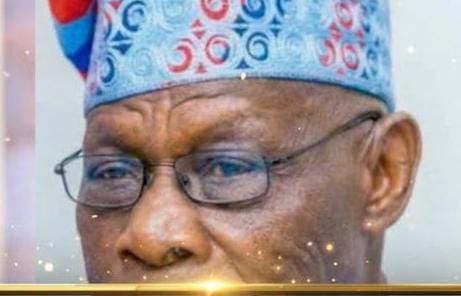
Nigeria’s former President, Chief Olusegun Obasanjo has blamed the exit of the Sahel nations on the handling of the military coup in Niger Republic by the Economic Community of West African States, ECOWAS.
Obasanjo said the regional bloc’s response contributed to a deterioration in relations and the withdrawal of Niger, Mali and Burkina Faso from the organisation.
According to reports, Obasanjo made the remarks during an interview at the Harvard Kennedy School’s Institute of Politics, while assessing insecurity and political instability across Africa.
He said West Africa had experienced renewed instability following coups in the three countries, with conflicts continuing to affect the region.
“We seem to be doing fairly well until we started having a spate of coups again. Mali, Burkina Faso, Niger Republic,” Obasanjo noted.
The former president specifically criticised the handling of the coup in Niger, saying the response contributed to the wider divisions within the regional bloc.
“We were still managing to keep our regional organisation intact, ECOWAS, until the coup in Niger Republic, when I believe the way ECOWAS as an organisation handled it, and Nigeria as the leader in ECOWAS reacted, made three of the members of ECOWAS, Mali, Burkina Faso and Niger Republic, rebel,” he said.
“I think it was a bit of a sort of rebellion and they got out of ECOWAS and declared themselves Alliance of the Sahel.”
He argued that the situation had changed significantly for ECOWAS since the coups, noting that the regional bloc was still pursuing efforts to bring the three countries back into its fold.
“Since then, things have not been the same for ECOWAS as a region, and things have not been the same.
“There has been conflict in Mali, conflict in Burkina Faso, conflict in Niger Republic. An effort to bring them back into ECOWAS is still being pursued,” he said.
In July 2023, Nigerian President Bola Ahmed Tinubu became Chairman of the ECOWAS Authority of Heads of State and Government and vowed a firm response to military coups in West Africa.
Following the July 26, 2023 coup in Niger, which ousted President Mohamed Bazoum, Tinubu led ECOWAS in condemning the takeover, imposing sanctions and demanding the restoration of constitutional rule. The regional bloc also threatened possible military intervention and activated its standby force, but ultimately pursued diplomacy rather than launching an operation.
The proposed intervention deepened divisions within the region. Mali and Burkina Faso, both under military rule, warned that an attack on Niger would be considered an attack on them and pledged to support the Nigerien junta.
In September 2023, the three countries formed the Alliance of Sahel States (AES), a mutual-defence pact intended to strengthen their security cooperation and reduce their dependence on ECOWAS and Western-backed arrangements.
In January 2024, Mali, Burkina Faso and Niger announced their withdrawal from ECOWAS, accusing the organisation of unfair treatment, foreign influence and failing to address insecurity in the Sahel.
Obasanjo’s comments came as he described Africa as experiencing one of its worst periods of armed conflict, violence and insecurity since independence.
“I think I would be right to say that since independence, because we know the period of the war of independence and things, but since independence, maybe things have not been as bad as this in terms of wars and conflicts and violence in Africa,” he said.
Obasanjo said insecurity was not confined to West Africa, pointing to the conflicts in Sudan, the Democratic Republic of Congo (DRC) and Ethiopia.
He described Sudan’s crisis as one of the continent’s greatest humanitarian disasters, citing the involvement of external powers in the conflict.
“And then now we have the one that is worse in Sudan, where you have two parties in Sudan, one supported by Egypt, essentially, another one supported by UAE, and one of the greatest humanitarian disasters in Africa as of today,” he said.
On the DRC, Obasanjo said the country had not experienced lasting peace since 1960 and warned that the situation was deteriorating.
“Democratic Republic of Congo, since 1960, has not known real peace. And the worst is already developing in Democratic Republic of Congo now, with one government in Kinshasa and another government building up in Goma, eastern Congo,” he said.
He added that the conflict between the DRC and Rwanda had persisted for more than 30 years.
“The situation, of course, between Rwanda and DRC, has been on for more than 30 years.”
Summarising the security situation across Africa, Obasanjo said no region was free from some form of conflict, violence or insecurity.
“There’s no region in Africa that hasn’t got an element of war, but conflict. Africa is ridden with conflict. There’s no region which hasn’t got an element of war,” he said.
“No region without violence in one form or the other. No region without insecurity of one kind or the other. So that’s the picture that I can paint for Africa.”
Obasanjo also argued that African countries should be able to seek help from international partners when needed, saying the principle of “African solutions to African problems” should not rule out external assistance.
He called for the principle of subsidiarity to guide decisions about how conflicts are addressed, with the level of intervention determined by the nature of each crisis.
“And we always talk of two things. One is African solution for African problem. Another one is subsidiarity”.


