
On The Frontline With Boma

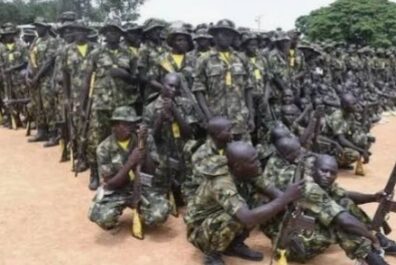
Last Thursday, July 9, 2026, a statement that was expected to inspire hope instead provoked disbelief. During an interview with News Central Television, the Minister of Defence announced that the monthly salary of Nigerian soldiers had been reviewed upward from ₦49,000 to ₦100,000. According to him, the increase was intended to improve the welfare of military personnel and boost their morale as they continue to defend Nigeria against terrorism, banditry, kidnapping and other threats to national security.
I listened carefully to the announcement. I listened again to ensure that I had not misunderstood what was said. Then I asked myself a simple question: Are those who formulate policies in Nigeria truly in touch with the realities confronting ordinary citizens? More importantly, do they fully appreciate the enormous sacrifices made daily by the men and women wearing the nation’s military uniform?
This discourse is not intended to incite anyone against constituted authority. Neither is it an attempt to diminish the effort of the Defence Minister, who appears genuinely concerned about the welfare of the armed forces. Rather, it is an honest intervention born out of patriotism. If Nigeria sincerely desires different outcomes in its worsening security situation, then it must adopt a radically different approach to the welfare of those entrusted with defending the country’s sovereignty.
The first responsibility of every government is the protection of lives and property. Without security, there can be no meaningful economic development, political stability or social progress. Investors do not establish industries where insecurity reigns. Farmers abandon their farms when they fear being kidnapped or murdered. Children cannot learn in communities constantly threatened by armed groups. Healthcare services become inaccessible. Commerce declines. Entire communities become ghost settlements.
At the centre of this struggle are Nigerian soldiers. Every day, while millions of citizens go about their normal lives, soldiers are deployed in forests, deserts, creeks and mountains confronting enemies most Nigerians will never encounter. Some spend weeks and even months away from their families. They endure harsh weather conditions, sleep in difficult terrain and face the constant possibility that every patrol could be their last.
Many have paid the ultimate sacrifice.Many returned home with life-changing injuries.Many remain uncelebrated heroes whose names may never appear in newspaper headlines.
Yet these are the same men and women who, until now, reportedly earned just ₦49,000 monthly.
Even after the announced increase, the figure rises only to ₦100,000.
One is compelled to ask: is this truly the value Nigeria places on those who defend her territorial integrity?
The soldiers are not machines. They are human beings. They have wives and husbands. They have children whose school fees must be paid. They have aged parents requiring medication and support. They have siblings who look up to them. Like every Nigerian family, they purchase food, pay rent, buy transportation, settle electricity bills and contend with the astronomical rise in the prices of basic commodities.
Can ₦100,000 genuinely sustain a household in today’s Nigeria?
Can such an amount conveniently feed a family of four for one month?
Can it adequately pay rent, transport, utilities, children’s education and healthcare simultaneously?
The honest answer is obvious.
Inflation has fundamentally altered the purchasing power of the naira. What could comfortably cater for a family’s monthly needs a decade ago can scarcely purchase groceries today. A bag of rice, cooking gas, transportation, school materials and medical expenses have all become significantly more expensive. Every Nigerian knows this because everyone experiences it.
Therefore, while the salary review may appear substantial when viewed only in percentage terms, its practical value tells a completely different story. Doubling a very small income does not necessarily translate into decent living conditions. Sometimes it merely changes the arithmetic while leaving the hardship untouched.
There is another dimension to this conversation that deserves serious reflection.
Nigeria today is not the Nigeria of twenty or thirty years ago. The security environment has changed dramatically. The country has battled Boko Haram insurgency, banditry, kidnapping for ransom, violent extremism, pipeline vandalism, separatist agitations and various forms of organised criminality. The threats confronting our military have multiplied both in complexity and intensity.
If this salary adjustment had occurred before the era of widespread terrorism and organised armed violence, perhaps many Nigerians would have considered it reasonable within the economic realities of that period. But after years of continuous military operations across multiple theatres, expecting soldiers to confront increasingly sophisticated enemies while receiving remuneration that many consider inadequate raises legitimate questions about national priorities.
History teaches an important lesson.
Nations that value their security institutions invest heavily in the welfare of their personnel not merely because they are generous, but because they understand that national security is impossible without motivated professionals. Military effectiveness is not built solely on sophisticated weapons or advanced technology. It is equally built on the confidence that those risking their lives know their country values their service.
Good welfare enhances morale.Good morale strengthens discipline.
Strong discipline improves operational effectiveness.
Operational effectiveness ultimately guarantees national security.
These principles are interconnected.
To be fair, salary alone cannot solve every challenge confronting the Nigerian military. Better equipment, intelligence gathering, modern surveillance technology, improved accommodation, quality healthcare, insurance, psychological support, regular training and prompt payment of operational allowances are equally essential. Families of fallen soldiers deserve prompt compensation rather than endless bureaucratic delays. Veterans who have completed active service should not spend years pursuing benefits they earned through sacrifice.
However, salary remains the foundation upon which every other welfare policy rests.
No responsible society should expect extraordinary sacrifices from citizens while providing ordinary or inadequate compensation.
One of the ironies of our national life is the glaring disparity between the remuneration of some public office holders and that of security personnel. Nigerians have repeatedly expressed concern over the enormous cost of governance. Stories frequently emerge of extravagant official lifestyles, expensive convoys, luxury accommodation, foreign medical trips and other privileges associated with political office.
Whether every reported figure circulating in the public space is accurate or not, one undeniable reality remains: many citizens perceive a disturbing imbalance between the comfort enjoyed by sections of the political class and the conditions under which security personnel serve.
That perception weakens public confidence.It also raises difficult moral questions.
How can a nation comfortably allocate huge resources to political administration while expecting those defending its territorial integrity to survive on incomes that struggle to meet basic living expenses?
Should the defenders of the republic not rank among the nation’s highest priorities?
These questions deserve thoughtful answers rather than emotional reactions.
Some may argue that government resources are limited. That may well be true. Every economy operates within financial constraints. Yet budgeting is ultimately about priorities. Nations spend generously on what they consider indispensable. If national security is genuinely our foremost priority as successive governments repeatedly affirm,then the welfare of those providing that security should reflect that commitment.
A poorly motivated security system ultimately becomes an expensive national liability.
The issue before us is therefore larger than salary figures. It concerns the value we attach to service, patriotism and sacrifice. It concerns whether young Nigerians will continue to see military service as an honourable career worthy of their talents. It concerns whether families will gladly release their sons and daughters to defend the nation knowing they will be fairly treated if they survive—and properly cared for if they do not.
Patriotism flourishes where sacrifice receives recognition.
It weakens where sacrifice is taken for granted.
The Defence Minister deserves acknowledgment for recognising that something needed to change. Leadership begins with identifying problems. But identifying a problem is only the first step. The solution must correspond with the magnitude of the challenge.
If the intention was genuinely to improve welfare and strengthen morale, then this review should perhaps be regarded not as the destination but as the beginning of a broader conversation. Government should continue engaging military authorities, economic experts and relevant stakeholders to develop a remuneration structure that reflects present-day economic realities and the strategic importance of military service.
Our soldiers deserve more than applause during ceremonial parades.
They deserve more than emotional tributes whenever one of their colleagues falls in battle.
They deserve more than patriotic speeches delivered on Armed Forces Remembrance Day.
They deserve a remuneration package that allows them to serve their country with dignity, confidence and peace of mind.
After all, when a soldier leaves home for an operation, there is no guarantee of returning alive. The least a grateful nation can do is ensure that, while alive, he or she is not condemned to unnecessary financial hardship.
There is an old saying that a hungry man is an angry man. While professional soldiers are expected to remain disciplined regardless of circumstances, wisdom demands that governments eliminate avoidable conditions capable of undermining morale. A nation that expects maximum commitment from its defenders must equally demonstrate maximum commitment to their welfare.
Nigeria owes that much to its soldiers.Indeed, she owes them even more.
As citizens, we sleep because others stay awake. We celebrate because others stand guard. We pursue our daily ambitions because others are prepared to make the ultimate sacrifice in defence of the green-white-green.
That sacrifice should never be rewarded with a wage that struggles to sustain a family.
History will ultimately judge every generation not merely by the speeches it delivered, but by how it treated those who stood between the nation and chaos. If Nigeria truly seeks greater productivity, stronger national security and a military whose morale matches its courage, then this modest salary increase should not be the final word.
It should be the beginning of a far more courageous national conversation.
That, at least, is what we desire On the Frontline.
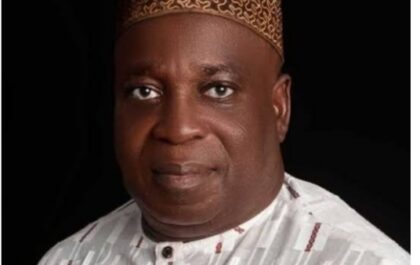
On The Frontline With Boma is published by The Port Harcourt Telegraph Newspaper authored by the managing editor
Nigerian Soldiers' Paltry Salary Raise