
On The Frontline With Boma
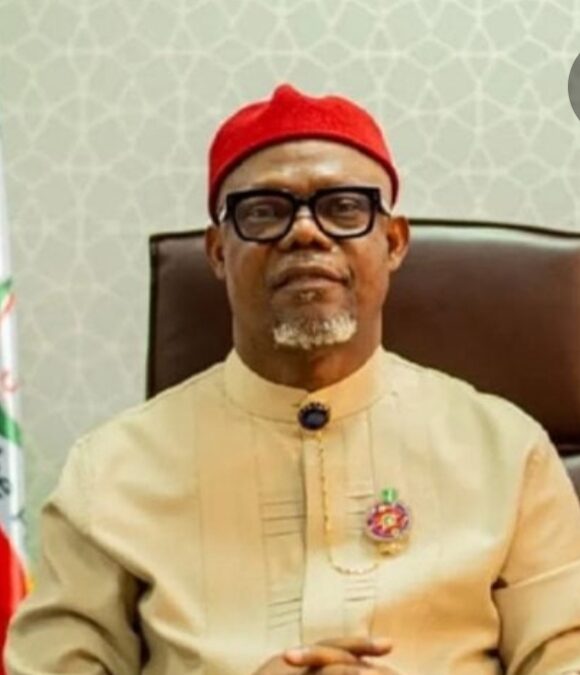
On February 19, 2026, I received a piece of news that struck with the force of a thunderbolt—sudden, jarring, and profoundly unsettling. It was the kind of news that does not merely inform; it shakes, it silences, it compels reflection. Senator Barry Barinada Mpigi—“the General,” as I fondly called him—had taken his final bow on the stage of life.
In that moment, a deep sense of loss settled in. Not just personal grief, but the collective pain of a people who had, in him, found a voice, a shield, and a dependable compass. For when a man like Barry Mpigi exits, it is not just a life that ends,it is an era that closes.
Barry was not an ordinary political figure. He was a phenomenon—one of those rare individuals who seemed to understand the intricate chessboard of politics instinctively. He played the game not with noise, but with precision. He spoke little, but his actions thundered. He pursued goals with unwavering determination, and more often than not, he achieved them. That quiet confidence, that calculated resolve, defined his persona.
To those who knew him closely, Barry was a study in contrasts—reserved yet deeply connected, simple yet profoundly influential, firm yet compassionate. He was a family man in the truest sense, deeply devoted to his loved ones, loyal to his friends, and unwavering in his commitment to his people especially those of the Rivers South-East Senatorial District whom he represented with pride and purpose.
The Mpigi family itself stands as a testament to values that seem increasingly rare in today’s political landscape—accessibility, trustworthiness, and a reverence for God. These were not mere labels; they were lived principles. And Barry embodied them effortlessly.
Born on June 21, 1961, into the revered Gbene Lewagbeh royal family of Koroma in Tai Local Government Area of Rivers State, Barinada—shortened to Barry—came into the world under circumstances that would later shape the narrative of his life. His name, meaning “God Never Sleeps,” was not a casual choice but a declaration rooted in experience.
Family accounts reveal that after his birth, Barry remained lifeless for days. It was a moment that tested faith, strained hope, and challenged the very boundaries of belief. Yet, in what can only be described as divine intervention, life returned to him. Not just life, but a vitality that would carry him through an extraordinary journey. His survival was not just a medical anomaly; it was a spiritual statement. From that moment, his life became a testament to resilience, purpose, and grace.
His educational journey began humbly at a public primary school in Koroma Tai, where he quickly distinguished himself as a favourite among teachers. By 1974, he had earned his First School Leaving Certificate, laying the foundation for a lifelong pursuit of knowledge.
He proceeded to Government Commercial School, Ibaa, where he obtained his West African School Certificate in 1979. But Barry was not one to settle. His hunger for knowledge was insatiable. He advanced to the Rivers State University of Science and Technology, where he earned a Higher National Diploma in Business Administration (Marketing) in 1984.
Following this, he fulfilled his National Youth Service Corps (NYSC) obligation in Benue State, serving as Administrative Secretary at the Chamber of Commerce, Mines and Agriculture in Makurdi. Even then, his leadership traits were evident—quietly effective, deeply committed, and forward-thinking.
Yet, for Barry, education was not a phase—it was a lifelong mission. In 2002, he obtained a Postgraduate Diploma in Educational Administration from the University of Port Harcourt. By 2007, he had earned a Master’s degree in Education from the same institution. Not stopping there, he pursued and obtained a Master of Business Administration (MBA) in Marketing in 2008 from the Rivers State University of Science and Technology.
Still driven, still searching, he crowned his academic journey with a Doctor of Philosophy (PhD) in Educational Management and Administration from the University of Port Harcourt in 2012. This relentless pursuit of knowledge was not for personal prestige alone; it was preparation—equipping himself for greater service.
And serve he did.
Barry Mpigi’s political career was marked by consistency, growth, and impact. He began at the grassroots, serving as Chairman of Tai Local Government Council, first in 1999 and later from 2008 to 2011. His tenure was defined by pragmatic leadership and people-oriented governance.
In 2001, he was appointed Commissioner for Youth Affairs, where he demonstrated a keen understanding of youth development as a cornerstone for societal progress.
His transition to national politics saw him elected to represent the Eleme/Oyigbo/Tai Federal Constituency in the House of Representatives from 2011 to 2015, and again from 2015 to 2019. His performance earned him the trust and confidence of his constituents, paving the way for his election as Senator representing Rivers South-East Senatorial District in 2019—a mandate that was renewed due to his proven track record.
In the Senate, Barry was not a passive occupant of a seat. He was an active contributor to legislative development and national discourse. As Chairman of the Senate Committee on Works and Vice Chairman of the Committee on Establishment, he played critical roles in shaping policies and overseeing national infrastructure development.
He also served on several key committees, including Army, Aviation, Federal Character, Foreign Affairs, Niger Delta, Police Affairs, Power, Customs, and Petroleum (Upstream). His involvement in the ad-hoc committee investigating alleged financial recklessness in the Niger Delta Development Commission (NDDC) further underscored his commitment to accountability and transparency.
Among his notable legislative contributions was the sponsorship of the bill establishing the Federal University of Environmental Technology, Sakpenwa, Tai—a visionary initiative aimed at promoting environmental sustainability and technological advancement.
He also proposed motions addressing critical national issues, including the deteriorating condition of the Police College in Tai, the urgent need to revive Nigeria’s palm oil industry, and the imperative of eliminating lead-based ingredients in paints to safeguard public health.
But beyond the chambers of legislation, Barry’s true legacy lies in the lives he touched.
He empowered the less privileged, supported the physically challenged, trained teachers, facilitated infrastructure development, improved road networks, expanded access to electricity, and championed agricultural development. These were not mere projects; they were lifelines—interventions that transformed communities and restored dignity.
To his people, he was more than a representative,he was a pillar. A defender. A source of strength. In every sense of the word, he was a General—fearless, strategic, and unconquered.
Yet, behind the public figure was a deeply personal story—a man anchored in love, faith, and family. His wife, Pat, captured this essence poignantly:
“He was not just my husband, but my companion, my strength, and a man whose life was dedicated to God, to humanity, and to the service of his people. His absence leaves a void that words cannot fully express.”
Her words echo the silent grief of a family and a nation. But even in sorrow, there is gratitude for a life well lived, for impact made, for a legacy that endures.
As she further reflected:
“However, I take comfort in the life he lived, the impact he made, and the grace of God that continues to sustain us even in this time of grief. We are holding on to the assurance that God is faithful and that His will, though painful, is perfect.”
Indeed, faith becomes the anchor when loss threatens to overwhelm.
Barry’s commitment to God was not confined to words. It found expression in action—most notably in his contribution to building a befitting house of worship in Koroma Tai. It was his way of giving back, of honouring the divine source that shaped his journey.
As preparations unfold for his final rites, the schedule reflects the magnitude of the life being celebrated—from tributes in Abuja to solemn gatherings in Port Harcourt and Koroma Tai. Each event is not just a ceremony, but a collective acknowledgment of a life that mattered.
And so, as the curtain falls, one truth remains undeniable: Barry Mpigi may have departed from the physical realm, but his spirit lingers—in the roads he built, the lives he touched, the institutions he strengthened, and the hope he inspired.
Death, in its finality, often claims victory. But in the case of Barry Mpigi, it meets resistance. For how do you conquer a man whose legacy refuses to die?
How do you silence a voice that echoes in the hearts of the people?
How do you bury a General whose battles were fought not for self, but for others?
You do not.
Because some men do not truly die.
They transition.
They transcend.
They become memory, legend, and inspiration.
Barry Mpigi was one of such men.
Unconquered in life.
Unconquered in death.
Adieu, General.