
By Editor with reports from Naija Standard Newspaper Inc. US
A combined team of professional elite army units from the international community: France, United States (U.S), and the United Kingdom (U.K) have drawn a battle line to obliterate and completely neutralize the activities of those criminal elements in Nigeria.
The United States Africa Command, AFRICOM ably supported by the Nigerian Army elite unit, 198 SF BN have championed the mission to counter Boko Haram in Northeast, other regions in the country.
The Nigerian Army elite unit has played a critical role in fighting terrorists in Northeast and beyond.
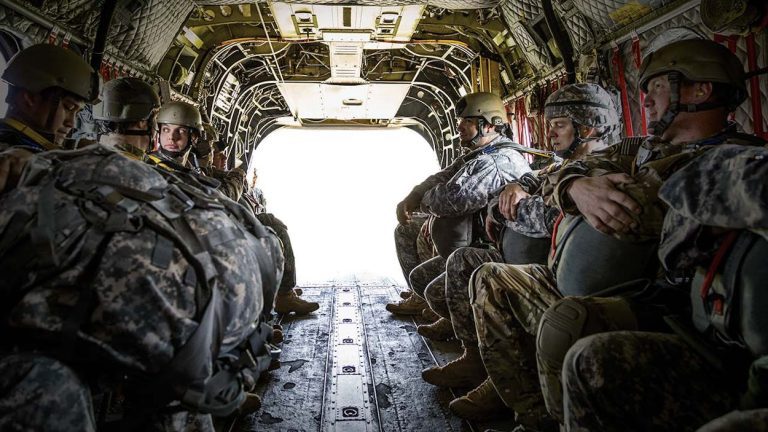
Taking the lead on this special mission, are the prestigious United States Special Forces, otherwise called ‘Green Beret’, being military legends for service members and civilians alike. They take on terrorists through quiet, guerilla war-style missions in foreign countries.
Green Beret teams operate in any environment, from City fighting to jungle warfare to desert scouting.
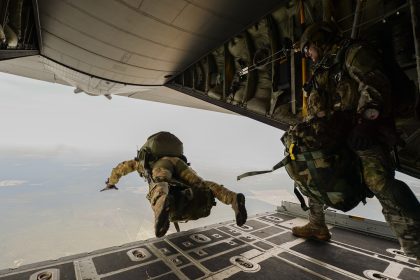
Security sources in the Washington DC team confided in our Correspondents that a few days before the Congressional delegation arrived in Abuja, the ‘Green Beret’ squad were already inside Nigeria and have already taken positions as undercovers, while unmanned SPY Fighter Plane F-35 occupy Airspace in Kwara, Ekiti, Sokoto States tracing the movement of the terrorists or any living objects inside the thick forest.
The ‘Green Beret’ mission is to obliterate and flush out the activities of terrorists, kidnappers, militants in Nigeria.
*Why the F-35 Fighter Jet?
A military source told Naija Standard Newspaper Inc USA that the F-35 is the most lethal, survivable and connected fighter aircraft in production today, giving pilots an advantage against any adversary and enabling them to execute their mission and come home safe.
In a bid not to permit any escape route for those terrorists, the U.S., U.K, and France jointly deployed GLF5 ISR N529RL, a modified Gulfstream V (G5) business jet, operated by Tenax Aerospace for the U.S. military/intelligence community, serving as a powerful, long-range Intelligence, Surveillance, and Reconnaissance (ISR) platform, known for rapid deployment and extended missions over conflict zones like Nigeria, collecting vital intel using specialized sensors.
Meanwhile, Nigeria’s National Security Adviser, Nuhu Ribadu, on Sunday hosted a United States Congressional delegation in Abuja as part of ongoing security consultations between both countries.
A U.S. lawmaker, Riley Moore, who is among the delegates, said in a post on X (formerly Twitter), “I came to Nigeria in the name of the Lord and on behalf of the American people.
Ribadu, in a message shared on his X handle, said the visit followed earlier talks held in Washington, DC, centered on mutual security interests.
His words: “This morning, I received a US Congressional delegation on a fact-finding mission to Nigeria, following our earlier engagements in Washington, DC, on shared security priorities”.
He added, “The delegation included Rep. Mario Díaz-Balart, Rep. Norma Torres, Rep. Scott Franklin, Rep. Juan Ciscomani, and Rep. Riley M. Moore.
“U.S. Ambassador to Nigeria, Ambassador Richard Mills, also attended, reflecting the importance both nations attach to this engagement.”
Ribadu said discussions focused on counter-terrorism cooperation, regional stability, and efforts to strengthen the Nigeria–U.S. strategic security partnership.
“I’m optimistic this engagement will deepen trust, collaboration, and shared commitment to peace and security,” he added.
According to Ribadu, discussions during the meeting focused on “counter-terrorism cooperation, regional stability,” and ways to “strengthen the strategic security partnership between Nigeria and the United States.”
The meeting comes amid heightened diplomatic tensions after United States President Donald Trump redesignated Nigeria as a Country of Particular Concern over alleged religious freedom violations, a move accompanied by threats of possible US military intervention.
The Federal Government has repeatedly dismissed claims of systemic Christian persecution, maintaining that insecurity affects citizens of all religious backgrounds.
As pressure mounts, the FG has continued seeking diplomatic and security support from global partners.