
Says despite abundant resources, Nigeria struggles with economic diversification
By admin
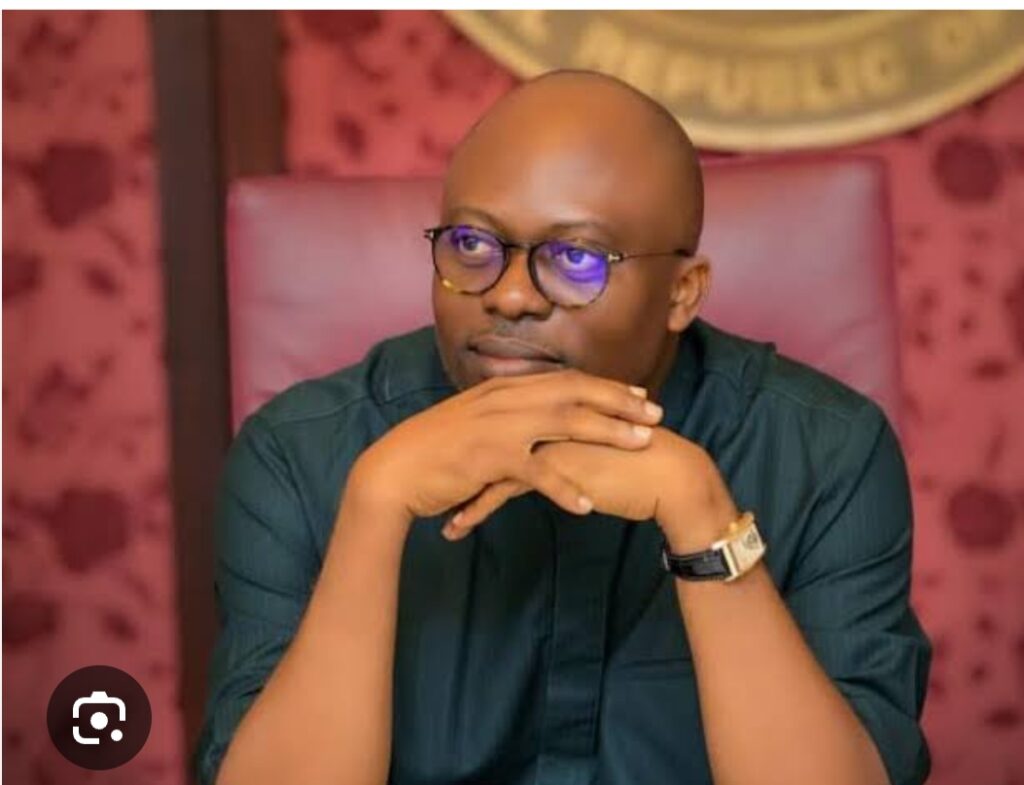
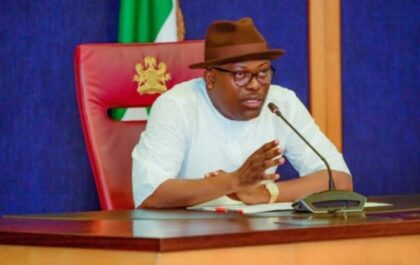
Governor of Rivers State,Siminilayi Fubara on Thursday in Lagos examined critical socio – political challenges besetting the nation which he noted stemmed from the leadership and the led.
In a text delivered at the 6th Annual lecture of Freedom online, at Sheraton Lagos on Thursday, Gov. Fubara blamed the challenges facing the country on lack of good governance, uninformed choices by the citizens and leaders not being held accountable
Represented by Tele Ikuru,a former Deputy Governor,Gov Fubara regretted that challenges of economic stagnation, unemployment, and corruption have persisted over the years despite the country being rich.
According to him, Rivers State is tackling the problem “by broadening its resource base by developing Tourism, Agriculture and Innovative sectors like Renewable Energy.”
Full Text :
Nigeria’s Socio-Political Challenges: Whose Fault, Leaders or the Led?
Text of a speech delivered by
Sir (Dr) Siminalayi Fubara, GSSRS, Governor, Rivers State At the Freedom Online 6th Yearly Lecture Held on Thursday February 27, 2025 at Sheraton
Lagos Hotel, Ikeja.
Introduction
Distinguished guests, ladies and gentlemen, it is an honour to speak on this critical issue concerning our beloved country, Nigeria. The question before us today demands deep reflection: Are Nigeria’s
socio-political challenges the fault of the leaders or the led? This question is not new. It has shaped discussions in policy circles, academic debates and everyday conversations among Nigerians.
To understand this, we must look at governance, accountability, and citizen participation. This lecture will examine the role of both leaders and the people in shaping our socio-political
landscape and propose ways forward for better governance and civic engagement.
Definition of Leaders and the Led
A leader is an individual or group entrusted with the responsibility of making decisions, setting policies, and guiding a society or organisation towards development. Leaders in Nigeria include
elected officials such as the President, Governors, Legislators and other political appointees who have the mandate to serve the public and implement policies for national progress.
Importantly, leaders are selected from among the led and thus are a microcosm of the society. This means that
the values, attitudes and behaviours of the general populace are often reflected in the leadership they produce.
The led, on the other hand, refers to the general populace—the citizens who entrust their leaders
with authority through elections. They include voters, taxpayers and all Nigerians who play a role in
shaping governance through their participation in democratic processes.
The led have the power to
influence leadership by making informed choices and holding leaders accountable for their actions.
Understanding Socio-Political Challenges in Nigeria
Nigeria faces several socio-political challenges that have persisted over the years:
- Economic Stagnation and Unemployment: Despite being rich in natural resources,
Nigeria struggles with economic diversification. Unemployment remains high, and many youths are either underemployed or lured into criminal activities. In Rivers State, we are confronting this problem by broadening our state’s economic base by developing tourism,
agriculture, and other innovative sectors like renewable energy.
Corruption and Governance Failures: Corruption remains a major hindrance to
development. The mismanagement of resources, lack of transparency in government
contracts, and diversion of public funds slow progress across the country. Despite
significant oil revenue, the misallocation of funds continues to affect development. For us in Rivers State in the past 18 months, we have established a resource allocation and
management process that is both transparent and judicious. We have transformed our
public procurement process to be more accountable, competitive, and seamless. We look
forward to increased partnership with regional intervention agencies like the Niger Delta
Development Commission ( NDDC), to accelerate a fully integrated regional development.
We fully support the Federal Government’s plan to accelerate the completion of the East
West road as this will greatly enhance regional integration through trade,
commerce, and mobility.
Insecurity and Youth Restiveness: Rising insecurity, from insurgency in the Northeast to
kidnappings and cult-related violence in the Niger Delta, remains a pressing concern. In
states like Rivers, political interference in law enforcement has made the situation worse.
Electoral Malpractices and Political Instability: Elections in Nigeria are often marred by
violence, rigging, and voter intimidation. This undermines the democratic process and
prevents credible leadership from emerging. Rivers State has witnessed some of the most
violent electoral cycles in the country.
Weak Institutions and Poor Infrastructure: Public institutions meant to serve the people
are often ineffective. Basic amenities like roads, healthcare, and education remain
inadequate in many states, despite vast national and state-level resources.
Institutional Failures and the Electoral Body
Institutions are supposed to act as checks and balances, but Nigeria’s weak institutions
have further exacerbated governance challenges. The judiciary, legislature, security
agencies, and electoral bodies often operate under political influence, undermining their
effectiveness. For instance, the Independent National Electoral Commission (INEC) has
failed to uphold the law concerning political defections. According to the constitution,
lawmakers who defect from the party on whose platform they were elected should lose
their seats. However, INEC has been selective in enforcing this rule, raising questions about
its neutrality. When institutions fail to do the needful, the rule of law is weakened, and
democracy suffers.
Examining the Role of Leadership
Leaders play a crucial role in shaping the socio-political landscape. Across Nigeria, governance
challenges persist. Some key issues include:
- Resource Management: Despite receiving significant federal allocations due to oil
revenue, many states, including Rivers, struggle to translate wealth into widespread
economic prosperity. - Public Accountability: A culture of impunity exists where government officials are rarely
held accountable for mismanagement. - Political Godfatherism: Many leaders emerge through the influence of political godfathers rather than based on merit, leading to a cycle of unaccountable governance.
- Failure to Empower Institutions: Weak institutions allow for unchecked executive power,
making it difficult to sustain long-term development.
The Role of the Citizens
While leaders play a key role, the people also have responsibilities. The saying, a people deserve
the leaders they get, implies that citizens have a hand in determining the quality of leadership. Key
issues among the electorate in Nigeria include: - Voter Apathy: Many eligible voters do not participate in elections, allowing corrupt
politicians to manipulate the system. This is particularly evident in states with high voter
suppression, such as Rivers. - Ethnic and Partisan Politics: Instead of demanding good governance, some citizens
support politicians based on ethnic or party loyalty rather than competence. - Tolerance of Corruption: Society often tolerates and even celebrates corrupt leaders,
making accountability difficult. - Limited Civic Engagement: Many people do not actively engage with government policies,
public hearings, or hold leaders accountable between elections.
The Interplay Between Leaders and the Led
There is a symbiotic relationship between leadership and followership. Leaders emerge from the
same society they govern. If the people demand accountability, credible leaders are more likely to
emerge. If citizens remain passive, bad governance will continue.
Case Studies from Nigeria and Rivers State:
- The Successes and Shortcomings of Past Administrations: Some national and state-level
projects have had positive impacts, such as infrastructure and health initiatives, but long-
term sustainability remains a challenge.
The Role of Civil Society and the Media: Journalists and civil society groups across
Nigeria, including in Rivers State, have sometimes played a role in exposing corruption and
advocating for policy changes.
Instances of Effective Civic Engagement: When communities have actively demanded
their rights, changes have occurred, proving that an engaged citizenry can influence
governance.
The Way Forward: A Shared Responsibility
To address these challenges, both leaders and citizens must take responsibility. Some key
recommendations include: - Public interest must be at the center of public policy: As has been noted earlier, leadership
and followership are two sides of the governance coin, for the government to be effective and
impactful, the needs of the people must be at the center of public policy. This is because
development is ultimately about the people. Therefore, the present and future needs of the people
must constantly shape both public policy and governmental action. This is why in Rivers State
today, under my leadership, our governance philosophy is RIVERS FIRST. By this philosophy, we run
a government that is inclusive, participatory, and prioritizes the needs of our people first in all that
we do as government. - Leadership must be meaningful to the people: Leaders have a unique responsibility to inspire
change in society. Indeed, responsive leaders can move the people from where they are to where
they ought to be. Any leadership that does not elevate the people to a better standard or qualify of
life may loose legitimacy and alienate the people. In fact, the mettle of leadership is often judged by
the way it treats the vulnerable majority rather than the privileged few. This is why in Rivers State, we
are building 20,000 housing units for low income workers to lift them to a better quality of life. This
is the largest public housing scheme in the history of Rivers State since 1967. We are also reviving
our primary health care delivery system and deepening health care penetration to all communities
in Rivers State. - Strengthening Institutions: The government must allow independent agencies to function
without political interference. - Promoting Civic Education: Citizens need to be educated on their rights and responsibilities in
governance. The media remains a critical partner in guaranteeing that citizens are appraised of their
rights and responsibilities. The traditional institutions also have a role to play in citizens education
and enlightenment. - Demanding Transparency and Accountability: Civil society, the media, and individuals must
continue to demand openness in governance. - Encouraging Ethical Leadership: Political parties must prioritize candidates with integrity and
competence. - Youth Empowerment: Addressing unemployment and youth restiveness through skill
acquisition and job creation will reduce insecurity. In Rivers State, youth empowerment and social
investment are key components of our 2025 budget. - Improving Electoral Integrity: Ensuring free, fair, and credible elections is crucial for better
leadership selection.
Conclusion
The debate over whether Nigeria’s socio-political challenges stem from the leaders or the led is
complex. In reality, both share responsibility. Leaders must be accountable and work for the
people, leaders must implement patriotic policies, strengthen institutions, while citizens must
actively participate in governance, they must become more politically conscious, demand
accountability, and vote based on competence rather than sentiment.. In Rivers State and across
Nigeria, we must break the cycle of poor leadership and passive followership by fostering a culture
of civic engagement and ethical governance.
The future of Nigeria depends on us. The question is: Are we ready to take responsibility?
Foreigners will not fix Nigeria for us. Until Nigerians take full ownership of the country’s problems and solutions, the cycle of poor governance and underdevelopment will persist. The choice is ours:
to act decisively and change Nigeria’s trajectory or remain in a state of stagnation, blaming one
another while the nation deteriorates
Thank you.